 What happens when answers come from AI, not a list of links? That’s the question shaping content strategy today. As search shifts toward conversational, synthesized responses, Generative Engine Optimization (GEO) helps creators and brands show up in AI-generated summaries, chat assistants, and answer engines. If traditional SEO taught us how to rank on pages, GEO clearly guides us on how to be selected by machines that write the page for the user.
Here, we will discuss practical approaches with actionable steps and the latest thinking.
What Is Generative Engine Optimization (GEO)?
GEO is the practice of structuring content so that generative systems like answer engines (chat assistants, such as answer engines, chat assistants, and AI-enhanced search) can understand, verify, and surface your information. It is important to understand that design content for
- Context and completeness: There will be a clear explanation with definitions, steps, pros/cons, and real-world nuance.
- Evidence and credibility: You must add citations, data points, and author expertise so AI can trust and quote you.
- Structured signals: Elements like summaries, FAQs, schema, and headings that make extraction easy.
In plain terms: GEO helps your content become the building blocks AI uses to compose answers.
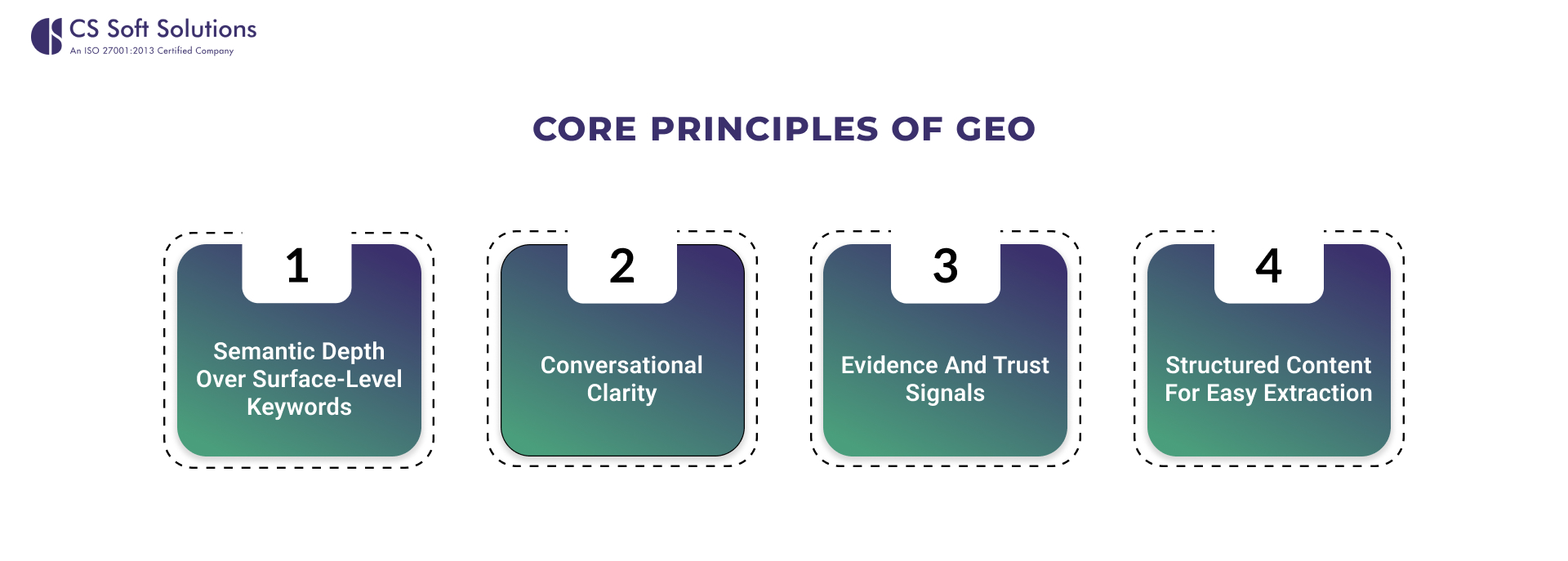
Core Principles of GEO
1) Semantic Depth Over Surface-Level Keywords
Your target should be to cover the topics instead of keyword stuffing. Imagine you’re writing a mini-guide to answer the main question, adjacent questions, and the “what if” edge cases. Include:
- Definitions, alternatives, and comparisons.
- Clear steps and decision criteria.
- Risks, trade-offs, and when-not-to-do recommendations.
2) Conversational Clarity
Generative engines prefer natural language that mirrors user queries. Use direct, active voice. Ask and then answer common questions. Keep sections short but substantial. Think: “helpful expert, friendly tone.”
3) Evidence and Trust Signals
AI systems favor content with verifiable sources and clear authorship. Add:
- Author bios and credentials.
- Citations (studies, standards, reputable blogs).
- Dates for data and updates.
- Transparent methodology when sharing analyses or lists
4) Structured Content for Easy Extraction
Make parsing painless:
- Use H2/H3 headings that map cleanly to subtopics
- Provide bullet lists for steps, pros/cons, and key takeaways.
- Add FAQs with succinct answers.
- Implement structured data (e.g., FAQPage, HowTo, Article schema) where applicable.
GEO vs Traditional SEO: What Actually Changes
You’re not abandoning SEO, you’re layering GEO on top.
- Focus: SEO targets ranking signals; GEO targets answerability and trustworthiness.
- Format: SEO leans on keywords, meta, and link equity; GEO adds thorough explanations, FAQs, and schemas that support AI summaries.
- Outcome: SEO aims for positions; GEO aims for inclusion in generated answers and attribution when users ask follow-up questions.
A practical mindset: optimize for humans first, and for machines that explain things to humans second.

How to Implement GEO (Step by Step)
1) Map Real Questions and Intents
You can list the top 10 questions your audience asks long-tail, problem-oriented, and scenario-based. Use customer emails, community threads, and support logs. Structure your content so each question has:
- A direct answer (1–3 sentences).
- A deeper explanation (1–2 short paragraphs).
- Optional: a visual, example, or checklist.
2) Write the “Answer-Ready” Section First
Open each subtopic with a crisp summary that could be quoted as-is. Then add context: definitions, steps, alternatives, and caveats. This mirrors how AI composes its snippets.
3) Layer in Structure
- H2/H3 headings aligned with user questions.
- Bulleted lists for clarity.
- FAQ blocks are at the end of major sections.
- Tables for comparisons (when relevant).
4) Add Evidence
Cite sources where claims matter, such as standards bodies, peer-reviewed studies, or authoritative industry reports. Also include publish dates and the proof of the source’s credibility.
5) Use Schema Thoughtfully
If applicable, add FAQPage, HowTo, or Article schema. While schema isn’t a magic wand, it signals clarity and improves machine parsing. Keep it accurate and minimal.
6) Maintain and Refresh
Generative engines reward fresh, accurate content. Update statistics, refine examples, and expand FAQs based on new user queries. Note update dates and changes.
Choosing a Generative Engine Optimization Agency (If You Need One)
Not every team has time to do this in-house. A skilled generative engine optimization agency should:
- Audit your content for semantic coverage, gaps, and trust signals.
- Build topic models and FAQ trees based on real user intents.
- Implement structured data, internal linking, and answer-ready summaries.
- Establish a maintenance cadence: quarterly refreshes, source updates, and new questions.
If you keep GEO internal, borrow this checklist and run lightweight sprints: “Topics → Questions → Answers → Evidence → Structure → Schema → Refresh.”
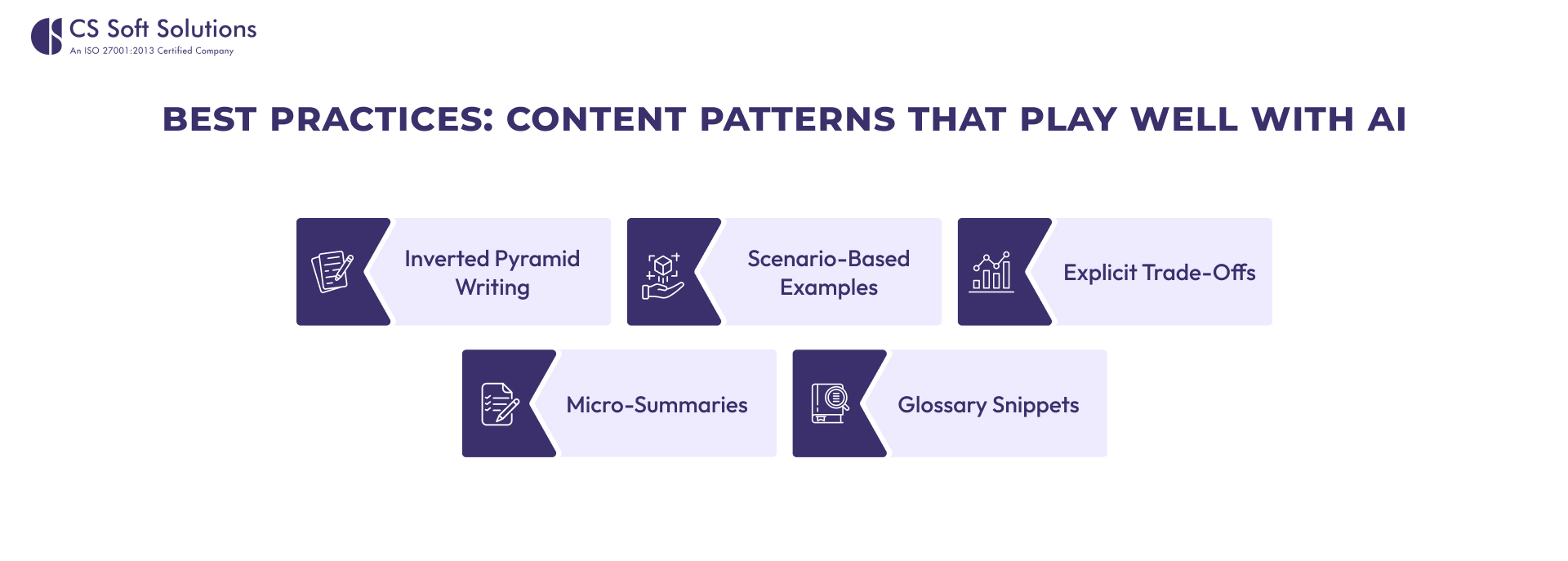
Best Practices: Content Patterns That Play Well with AI
- Inverted pyramid writing: The right approach is to start with the main point and then go into more detail.
- Scenario-based examples: An ideal practice is to show how advice changes with context (budget, experience level, constraints).
- Explicit trade-offs: State when a method works, and also check for the opportunities.
- Micro-summaries: One-sentence wrap-ups for each section, perfect for quick AI extraction.
- Glossary snippets: Short definitions for jargon, placed near the first mention
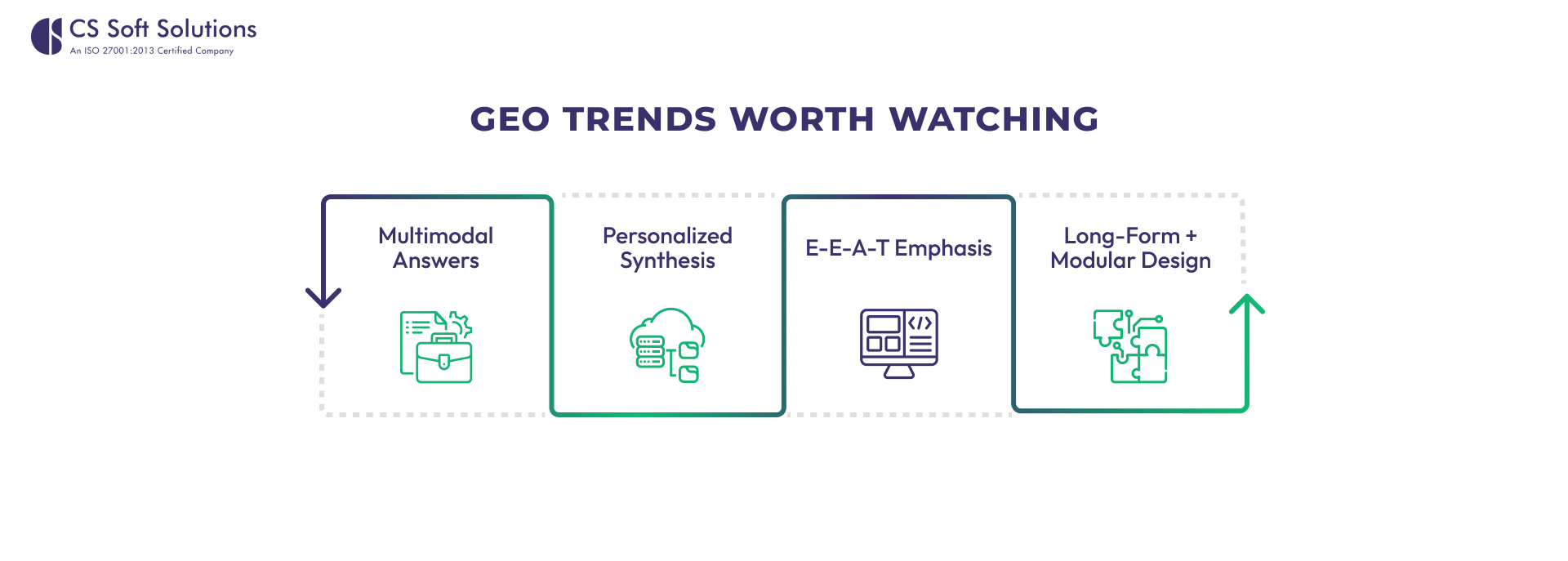
GEO Trends Worth Watching
- Multimodal answers: AI includes text with charts, code, and images. Prepare your content with accessible alt text, captions, and clear visuals.
- Personalized synthesis: Engines tailor advice to persona and intent. Offer role-specific guidance (beginner vs advanced, marketer vs engineer).
- E-E-A-T emphasis: Experience and author clarity matter. Add bylines, bios, and lived experience, not just abstract advice.
- Long-form + modular design: Deep guides win, but modular sections (FAQs, checklists, sidebars) make extraction and citation easy.
Best AI Tools for Generative Engine Optimization (Practical Uses)
While GEO is a content practice, certain tools help you work faster. Here’s how to leverage the best AI tools for generative engine optimization pragmatically:
- Intent mining & clustering: Use AI-assisted analytics to group queries into topic clusters and identify gaps.
- Answer simulation: Test whether your draft would be selected by an answer engine, simulate questions, and refine your “answer-ready” summaries.
- Schema helpers: Validate FAQ/HowTo/Article schema and ensure no conflicts.
- Citation management: Track sources, dates, and credibility notes so updates are consistent.
- Accessibility checks: Automated passes for headings, contrast, alt text, and reading level.
Choose tools that augment your editorial workflow, not replace editorial judgment.
Conclusion
So generative engine optimization aligns your content with the way AI understands and recommends information. It’s a practical evolution: write for humans, structure for machines, and ground everything in evidence. Whether you partner with a generative engine optimization agency or build these habits in-house, start small, one page, one topic, one set of questions, and iterate.
CS Soft Solutions India Pvt. Ltd. can help you translate this blueprint into a working content system: mapping real intents, crafting answer-ready sections, and establishing a refresh workflow.