From Product Concept To App Store: Working With An iOS App Development Company

Oct 23, 2026
6 min
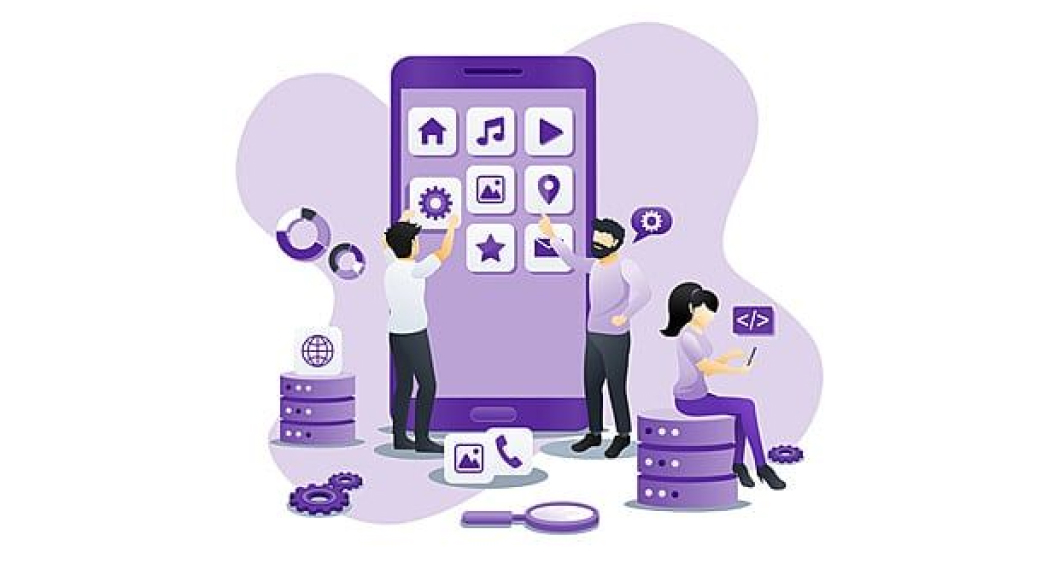
For most SaaS owners, the mobile app begins as a whiteboard design or a roadmap PowerPoint slide. That sketch has a long journey ahead of it before it becomes something your clients can download from the App Store. And practically every step of that path is dictated by the quality of your partner. A great iOS app development company does more than just build Swift code. It helps you validate the idea, design to Apple’s standards, produce a solid product, and get through review without costly surprises.
In this tutorial we will tell you what that trip looks like, so you know what to expect and where the main traps hide.
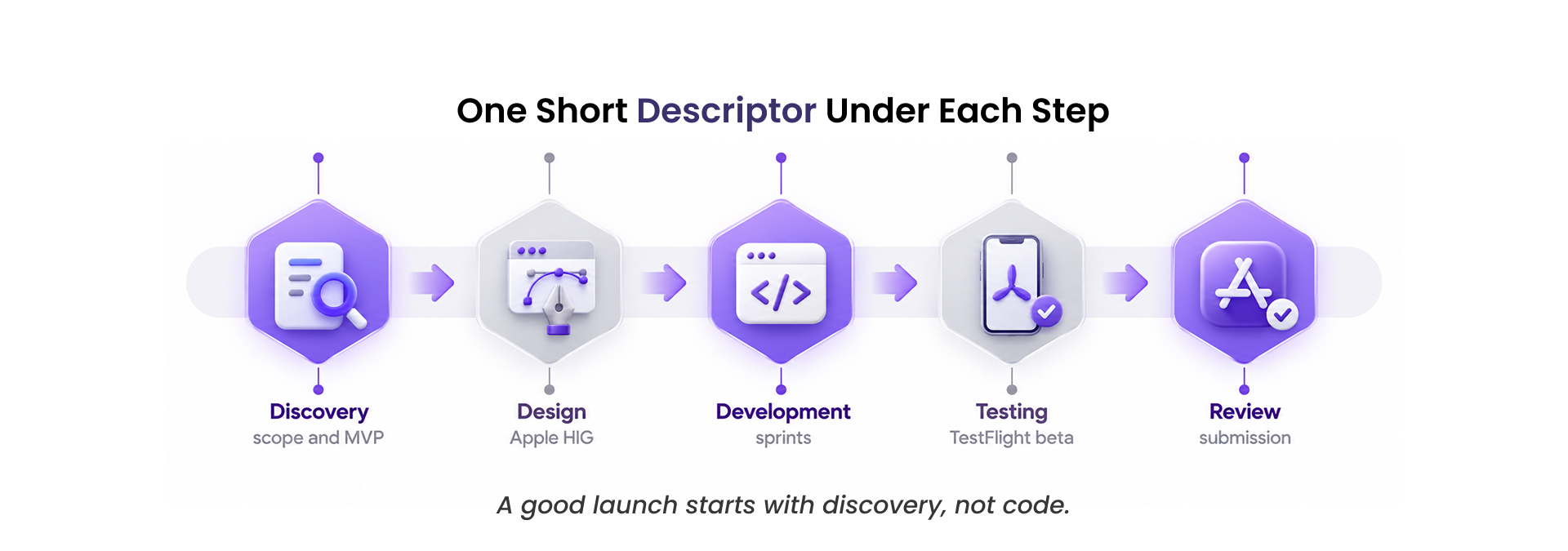
Building, Testing, and Shipping to the App Store
Once the designs are accepted, development normally proceeds in brief sprints with functional builds provided periodically. So you can give input early instead of at the end.
Development and QA
Good teams test all the time: unit tests for logic, device testing on all screen sizes and iOS versions, and performance tests for battery and memory use. TestFlight allows real people to test the software before it goes public, via Beta distribution. Even that often uncovers things that internal testing does not.
Submission and Review
Apple reviews each and every app before it goes public. Typical stumbling blocks: unclear privacy policy, missing in-app purchase setup, and no demo credentials for reviewers. An experienced iOS app development company prepares for these in advance. Which reduces the back-and-forth that can delay a launch.
Why SaaS Teams Also Consider Android App Development Services
Most of your SaaS clients will use a combination of devices, therefore shipping on iOS alone often puts part of your audience behind. That’s why many product teams prepare for Android app development services together with their iOS road map, even if one comes out first.
It’s the question of sequencing. Some teams will debut on iOS first to prove demand, then expand. Others create both simultaneously, covering enterprise customers with mixed device fleets right from the start. Either is fine as long as the shared back end, design system and release procedure are planned early.
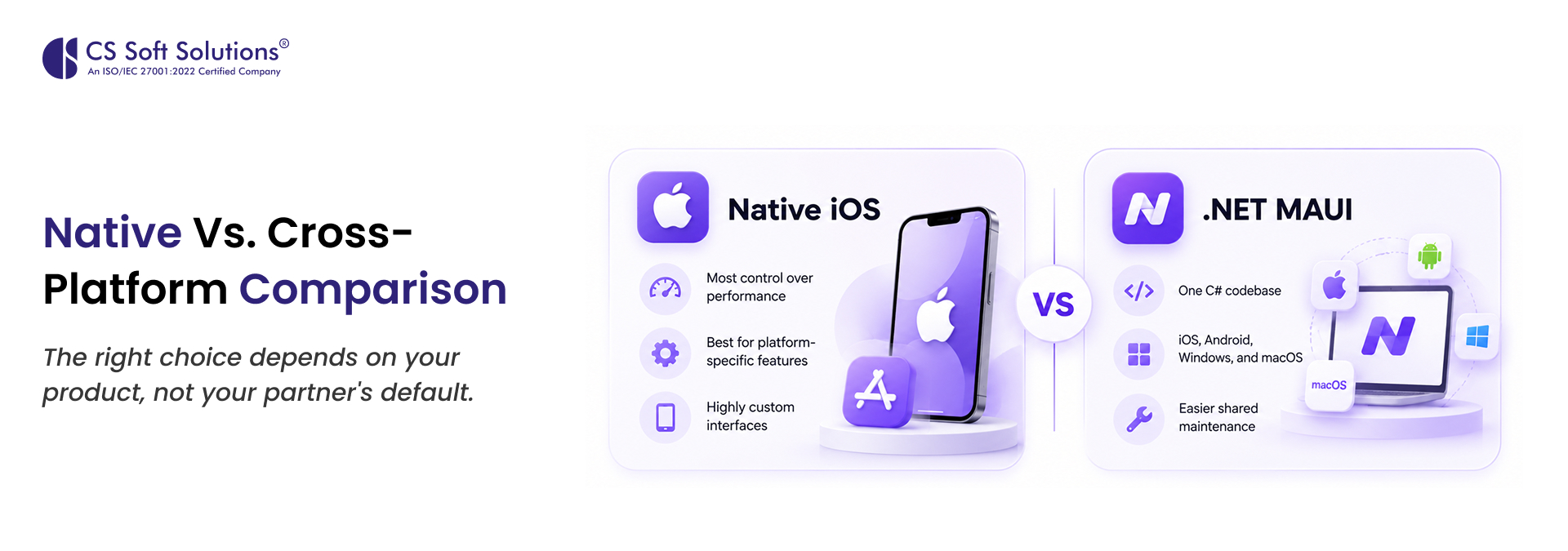
Where .NET MAUI Development Services Fit In
Native development is not the only choice. .NET MAUI development services enable teams to create iOS, Android, Windows, and macOS apps from the same C# codebase. That can eliminate duplicated effort. Even make it easier for SaaS enterprises already invested in the Microsoft ecosystem to exchange business logic across platforms.
There are tradeoffs, and it’s important to talk openly with your spouse. Cross-platform frameworks can accelerate delivery and reduce maintenance. But apps that are strongly dependent on platform-specific features or highly bespoke interfaces may still benefit from a fully native iOS development. The right iOS app development business for you will offer the most appropriate method for your product and your team.
Adding Intelligence With Gen AI Development Services
A few years ago, Artificial Intelligence capabilities were a novelty in SaaS products. Now they’re a regular expectation. For mobile apps, that might be in-app assistants, smart search, automated summaries, or personalised recommendations. Gen AI development services guide teams to build these capabilities ethically. Including how prompts are processed, what data the model may access, and how outputs are vetted before users see them.
Other issues for mobile are response speed over cellular connections. How much processing is done on-device versus in the cloud, and how user data is kept private. It is far easier to plan these out in discovery.
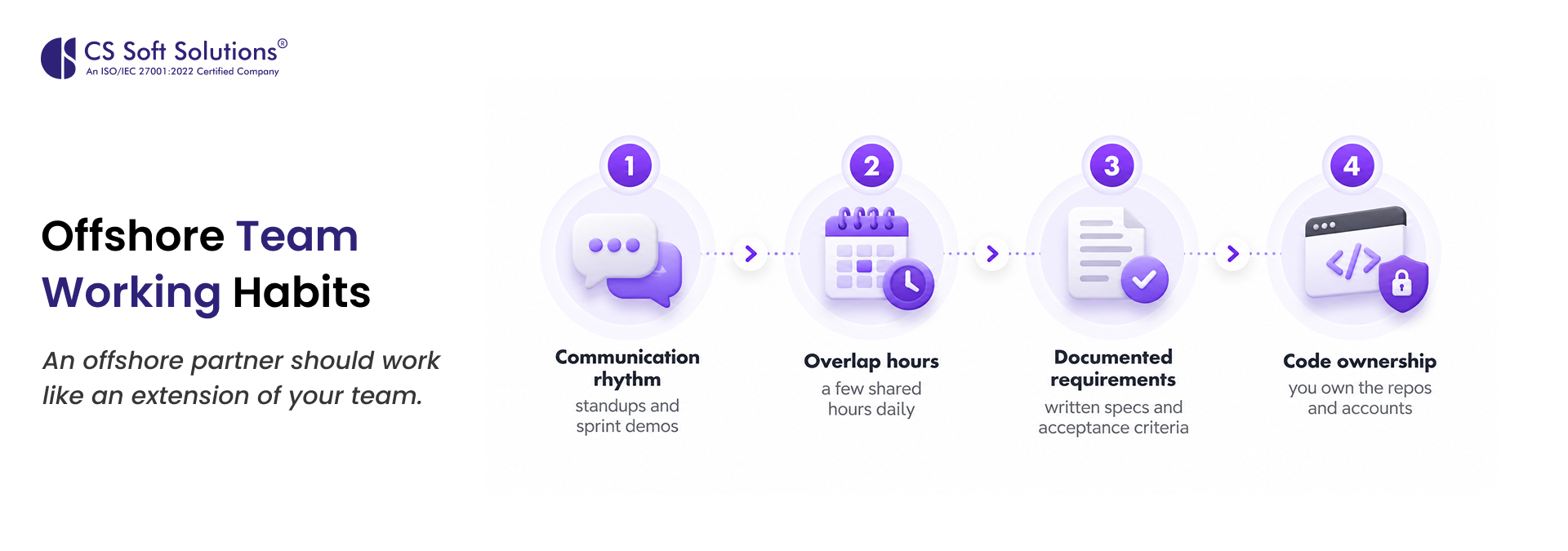
Making Offshore Development Solutions Work for You
To acquire competent mobile developers, scale up capacity, and keep budgets predictable, many US SaaS companies turn to Offshore Development Solutions. The model runs nicely when run with structure.
The distinction is made by some habits:
- Clear communication rhythm: Daily standups, sprint demos and a shared project board keep everyone in sync across time zones.
- Defined overlap hours: Even only a few shared working hours each day speeds up decision making.
- Documented requirements: Written requirements and approval criteria cut down on misunderstandings.
- Transparent ownership: Your team should own the source code, repositories, and developer accounts from day one.
Once you have these basics covered, an offshore partner becomes an extension of your product team.
Web Development Services Behind Your Mobile App
A mobile app is usually not an island. It relies on APIs, admin dashboards, authentication and data pipelines, and often shares features with your web product. That is the purpose of Web Design Services. Building the backend and web layer at the same time as the mobile app means. Those features will be in sync across platforms. Also the app won’t become a disconnected side project.
Teams that design the web, API, and mobile layers together ship updates more smoothly since a change in one place doesn’t silently break another.
Frequently Asked Questions
How long does it take to build and launch an iOS app?
Determines the breadth and complexity. A lean MVP can be built in a few months but a feature rich system with complex integrations takes much longer to develop. The discovery phase provides a more reliable timescale, rather than guessing up front.
Should we build native iOS or use a cross-platform framework?
There is no one right solution. Native programming gives you the best control over performance and access to platform capabilities. Even cross-platform options like .NET MAUI can cut down on the work involved in supporting different platforms.
What happens after the app is live on the App Store?
When you make the launch, you enter the following phase: crash and performance monitoring, reacting to user feedback, updates for new iOS releases, and frequent updates. Early planning will help prevent unforeseen costs.
Conclusion
Getting from product concept to App Store takes strategy, design, engineering, testing, and a plan for what happens after launch. Whether you want to go native with iOS or Android, look for cross-platform solutions, add AI features, or use an offshore team. The common thread is a partner who communicates well and designs with your long-term product goals in mind.
CS Soft Solutions India Pvt. Ltd. partners with SaaS and enterprise teams throughout the mobile journey. That’s from strategy, from development and testing to release. If you’re planning your next mobile move, a talk about scope and priorities is a sensible place to start.
 Enterprise security standards