iOS App Development in 2026: Top Trends & Tools for SAAS Success

Apr 21, 2026
9 min
In 2026, iOS app development is a cornerstone of success for SAAS companies. The number of devices with active iOS applications all over the globe is more than 1.5 billion, and companies that invest in iOS apps have greater user engagement, retention, and revenue growth. The Apple ecosystem is associated with quality user experiences, strong security, and high monetization opportunities, which is why it is a perfect platform to use SAAS solutions.
In the case of the SAAS businesses, the iOS application is not merely an optional extra but a competitive resource. There is a higher tendency to spend on subscriptions and premium features by users of iOS platforms, and the expectation is for high-performance applications with no issues.
This guide explores the latest trends, essential tools, and actionable strategies to help SAAS companies thrive with iOS app development in 2026.
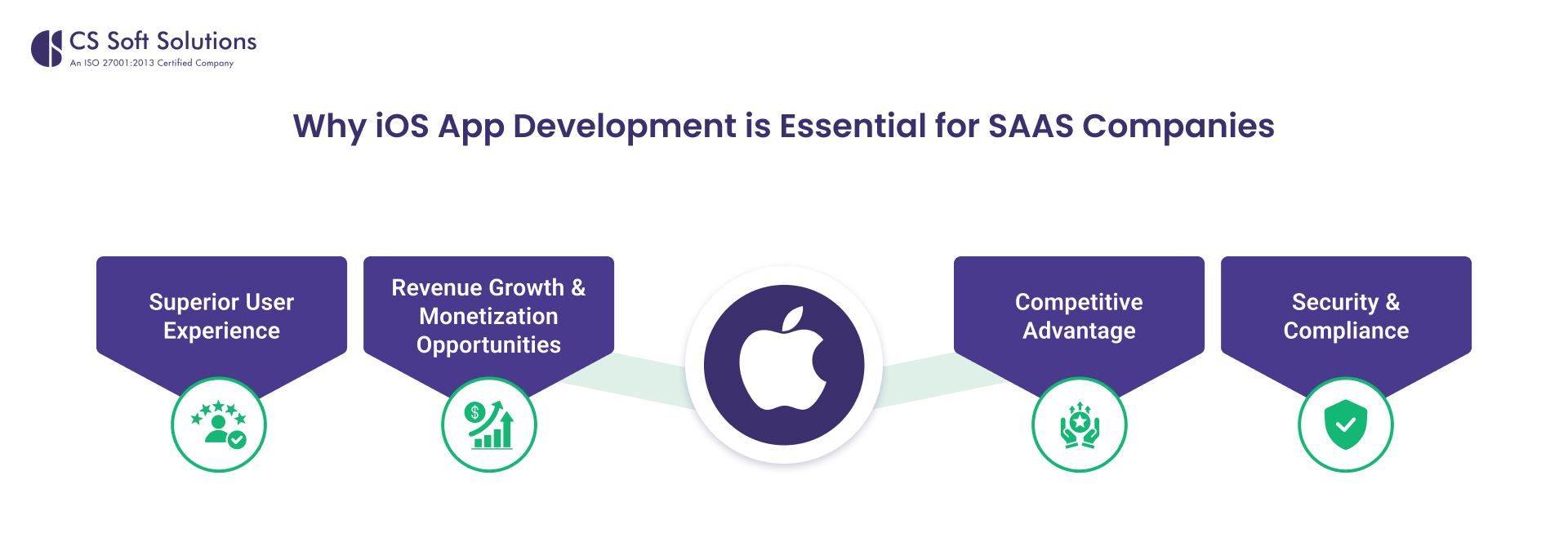
Why iOS App Development is Essential for SAAS Companies
1. Superior User Experience
iOS users are fast, intuitive, and visually appealing apps. The companies that use the form of SaaS that satisfies these expectations enjoy:
- 30% higher user retention rates compared to web-only platforms.
- Lower bounce rates due to optimized performance and smooth navigation.
- Stronger brand loyalty, as users associate high-quality apps with reliable services.
2. Revenue Growth & Monetization Opportunities
- Consumers of iOS make 2.5 times more in-app purchases and subscriptions compared to Android users.
- IOS is more secure and reliable, and therefore, an enterprise client finds it necessary when it comes to B2B SAAS solutions.
- Advertisements within the application and paid features provide an extra source of revenue, enhancing the overall profitability.
3. Competitive Advantage
- Early penetration of new technologies, such as AI, AR, and VR, differentiates SAAS companies from the rest.
- Speedier time to market using Apple’s lean development tools and resources.
- The increased visibility of the apps in the app store is due to the search and recommendation algorithms of Apple being optimized.
4. Security & Compliance
- iOS applications have the advantage of being under tight security measures by Apple, which minimizes vulnerabilities and threats of data breaches.
- Biometric authentication (Face ID, Touch ID) improves the confidence of the user and eases secure access.
- The privacy features in iOS make it easier to comply with the global data regulations (including GDPR and CCPA).
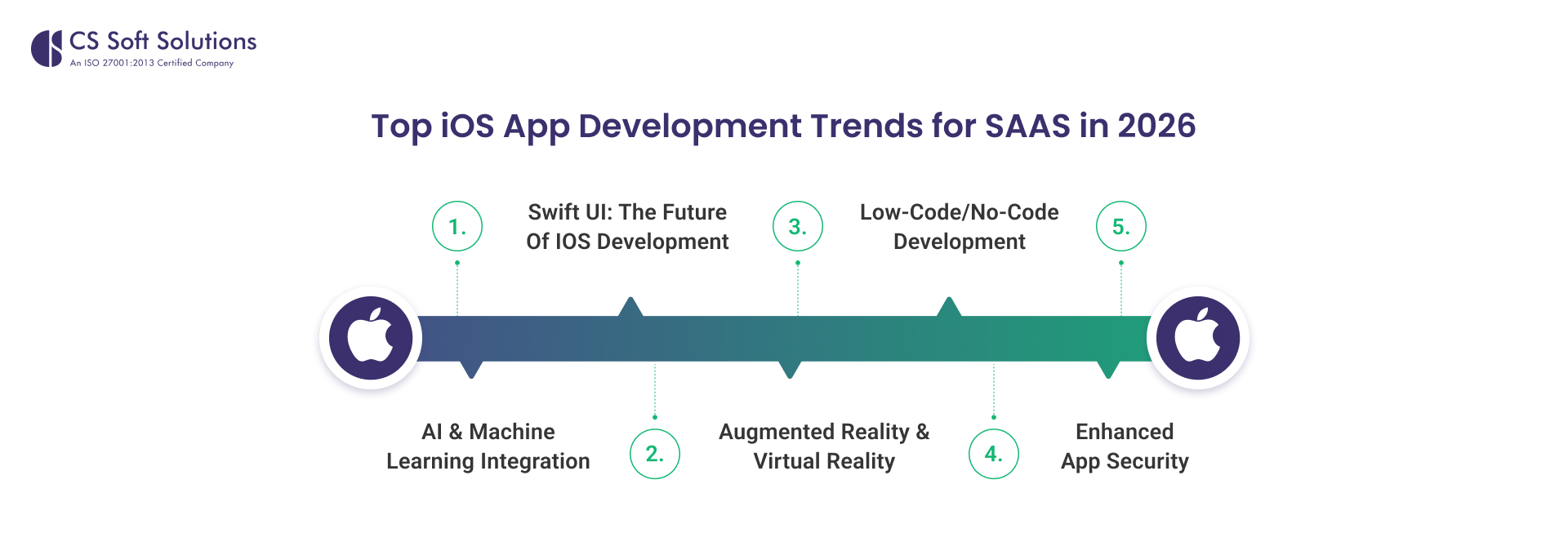
Top iOS App Development Trends for SAAS in 2026
1. AI & Machine Learning Integration
Machine Learning (ML) and Artificial Intelligence (AI) are changing the personalization of experiences and workflow automation in SAAS apps:
- Predictive Analytics: Preview user needs and recommend actions. That includes automatic reports or intelligent notifications.
- Natural Language Processing (NLP): Allow voice recognition and chatbot assistance with AI support to provide customer support in real time.
- Computer Vision: Improve such capabilities as document scanning, image recognition, and augmented reality (AR) experiences.
2. SwiftUI: The Future of iOS Development
Apple has made SwiftUI, a declarative UI framework, the new gold standard in developing modern iOS applications:
- Quick development via real-time previews and a drag-and-drop interface.
- A cross-platform with macOS, watchOS, and tvOS, enabling SAAS companies to target a larger audience.
- Plug-and-play maintenance, including reusable code, and lowering long-term development.
3. Augmented Reality (AR) & Virtual Reality (VR)
AR and VR are transforming the interaction of the user in the SAAS market:
-
- Interactive Onboarding: Explore the complex features with the help of AR, and the learning curve would be less painful.
- Remote Work: Virtual Collaboration. Virtual collaboration tools enable remote teams to work and communicate better.
- Product Visualization: A feature that lets users have a virtual tour of SAAS features or interactively give them a test drive.
4. Low-Code/No-Code Development
No-code and low-code platforms (Flutter and React Native) enable the SAAS companies to:
- Create and debug prototypes fast without a lot of coding experience.
- Engage the non-technical members of the team in the development process, which entails collaboration.
- Cut down the development expenses and retain high-quality user experiences.
5. Enhanced App Security
As threat attacks become more prominent in cyberspace, iOS app security and data protection must be given top priority:
- End-to-end encryption provides a safe environment for sensitive user information.
- Biometric authentication offers a smooth but secure authentication process.
- Security audits should be conducted regularly.
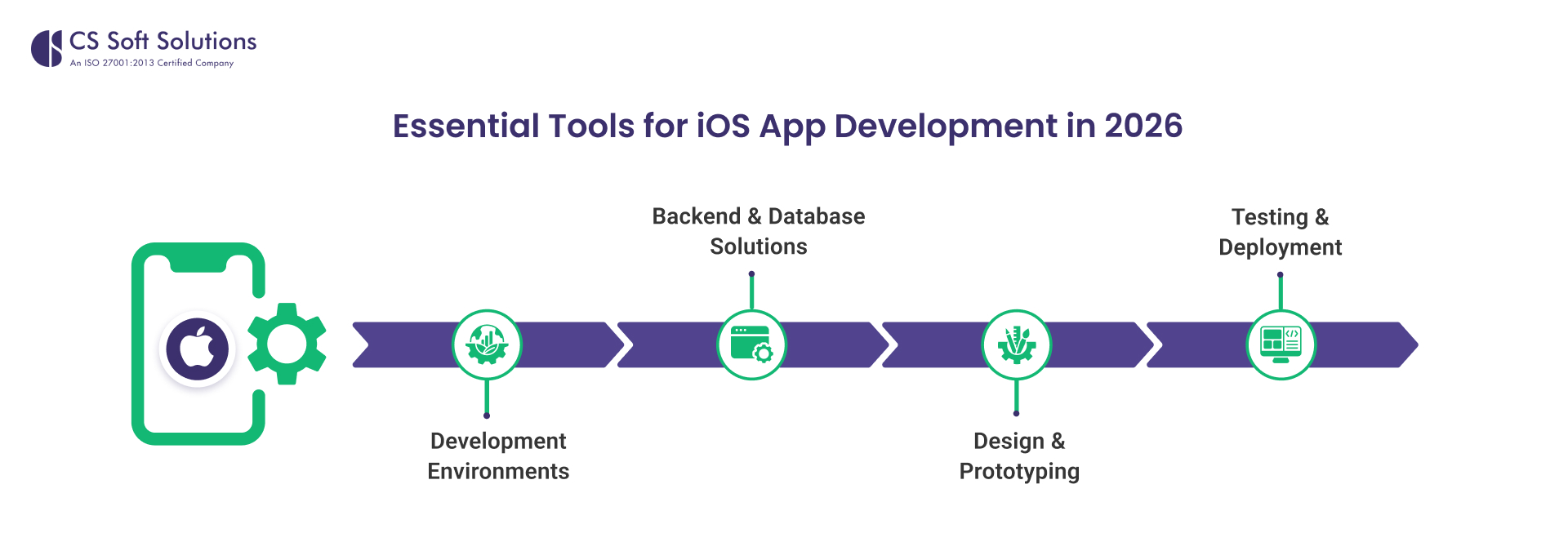
Essential Tools for iOS App Development in 2026
Development Environments
The selection of development tools is important to the SAAS companies. Xcode 15 is still the default Integrated Development Environment (IDE) for the development of iOS, macOS, and watchOS apps. It contains such potent tools as real-time debugging, interface designers, and optimizers.
SwiftUI is the proclaimed UI framework of Apple, which allows developers to create contemporary, responsive interfaces with little code. It facilitates the development on cross-platforms, thus enabling easier deployments of apps on various Apple gadgets.
Flutter is also a good option to achieve the same when an SAAS company aims at supporting both iOS and Android. It enables the developers to have a single code and run it across all places, which saves time and costs of developing code.
Backend & Database Solutions
SAAS applications must have a powerful back-end. Firebase is a suitable solution for startups and small-to-medium SAAS business with real-time databases, authentication, and cloud functions. At the enterprise level, AWS Amplify provides the scalability of the backend service that increases with the number of users.
Design & Prototyping
Design is essential in user adoption. Figma and Sketch are applications that have allowed people to create visually attractive and functional apps by collaboratively designing and prototyping their UI/UX. Another popular tool is Adobe XD, which allows creating interactive wireframes and testing user flows in advance, prior to starting to write code.
Testing & Deployment
Prior to the release of your iOS app, you have to do extensive testing. TestFlight enables you to test your app on actual users to collect the feedback needed to refine your app. Jira is an effective project management software that enables development teams to remain agile and organized. Fastlane will be used to automate the deployment process and make the app updates a smooth and efficient process.
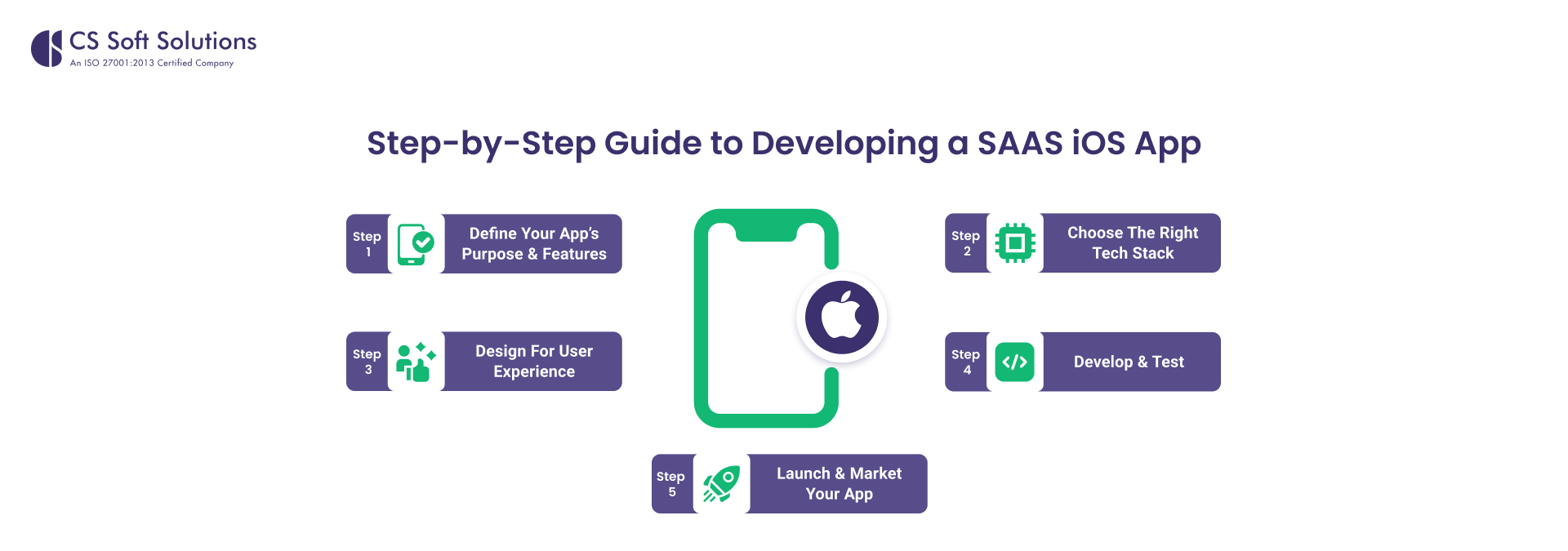
Step-by-Step Guide to Developing a SAAS iOS App
Step 1: Define Your App’s Purpose & Features
The first step is to figure out the extraordinary features of your app. It might be offline support for SAAS companies, analytics dashboards, real-time data synchronization, or teamwork. Establish clear KPIs, like revenue growth, retention rates, and user acquisition, to track the success of your app.
Step 2: Choose the Right Tech Stack
The key to your app’s performance and scalability is choosing the appropriate technology:
- Programming language: Due to its speed and efficiency, Swift is the recommended language for developing native iOS applications. Dart (with Flutter) is a formidable competitor in cross-platform applications.
- Framework: UIKit is available to support legacy applications, and SwiftUI is the best option for creating a contemporary, responsive application.
- Backend: Firebase is an excellent startup-friendly solution that has real-time databases and authentication. In the case of bigger business organizations, AWS offers secure and scalable backend services.
Step 3: Design for User Experience
An example of a distinguishing factor of SAAS apps is user experience (UX). An example of a distinguishing factor of SAAS apps is user experience (UX). Adhere to the Human Interface Guidelines of Apple to provide an easy-to-navigate format. Make high-fidelity prototypes and user flows with Figma or Sketch, and then test them and move on to development.
Step 4: Develop & Test
Embrace Agile methodologies to develop fast and react to feedback. TestFlight beta test and fix bugs before launch. Optimize your performance by using the debugging tools of Xcode and make sure that your app is running on every device of iOS.
Step 5: Launch & Market Your App
An effective launch needs app store optimization (ASO). Increase the visibility by using appropriate keywords in your app title and description, such as iOS app development” and “SAAS and mobile app development company.” Ask users to leave a review and testimonial as social proof, and think about placing Apple Search Ads to target the high-intent users.
Usual Problems in iOS App Development and a Way to Avoid Them.
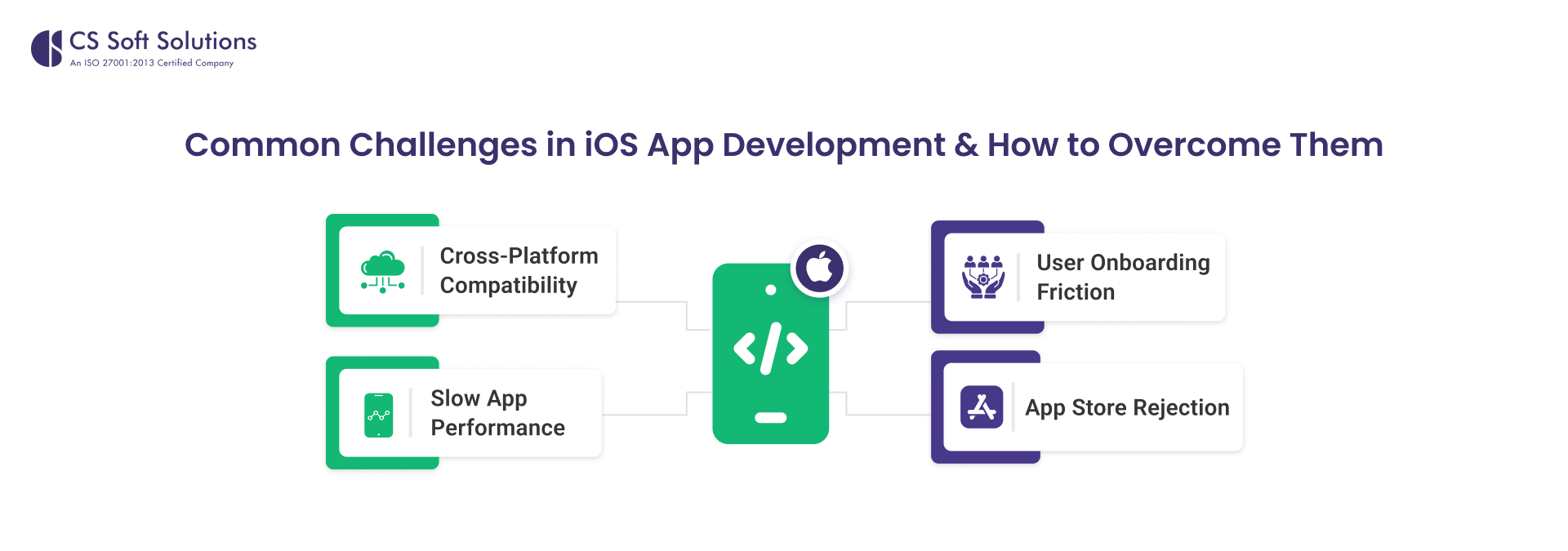
Common Challenges in iOS App Development & How to Overcome Them
Cross-Platform Compatibility
It may be difficult to develop iOS and Android. Development with Flutter and React Native makes it easy to do cross-platform development, having just one codebase that works on both operating systems.
Slow App Performance
User frustration and churn can be caused by performance problems. Write as little code as possible, and implement SwiftUI to optimize your application and reduce reliance on third-party packages to achieve high load time and performance.
User Onboarding Friction
Users can be discouraged by a complicated onboarding program. Introduce interactive tutorials, tooltips, and guided tours, enabling the user to reach the start easily and quickly.
App Store Rejection
Apple has a rigorous policy in the App Store. In order not to be rejected, be careful about the rules created by Apple and make sure that your app is well tested and that all of its features are in agreement with their policies.
The Future of iOS App Development for SAAS
With ever-changing technology, the SAAS companies must remain on the frontline by:
Implementing AI-based automation in offering bespoke user experiences.
Applying AR and VR as immersive and interactive experiences.
Valuing security and compliance as a way to develop and sustain user trust.
Conclusion
iOS app development will be a breakthrough in 2026 to SAAS companies. With the help of AI, SwiftUI, AR, and effective security, businesses will improve user experiences, make more money, and have a competitive advantage.
Ready to create a high-performing iOS app for your SAAS? Collaborate with CS Soft Solutions India Pvt. Ltd., your reliable iOS developer, and create innovative, scalable, and secure mobile solutions to your business requirements.
 Enterprise security standards