 Revenue growth no longer starts with a sales call. It starts much earlier, often before a prospect knows they are actively buying. This change is why demand generation services are now a key part of how businesses today build reliable revenue streams. Companies now work on building awareness, trust, and intent long before they start talking about sales.
This method is necessary in competitive markets around the world. We create long-lasting pipelines in this manner.
Why Traditional Lead Generation Falls Short Today
The main goal of classic lead generation is to get contact information. The main goal is to fill out a form or ask a quick question.
Many leads look appealing on paper, but they do not want to buy. Instead of closing, sales teams spend time teaching. Pipelines fill up, but revenue stays the same. Demand generation comes in to fill this gap.
A form does not start demand generation. It all starts with knowing how the buyer’s journey works.
What Demand Generation Services Really Mean
At their core, demand generation services are all about building interest, relevance, and trust throughout the entire buying process. Not just volume is the goal. It is about the quality and the timing.
Instead of pushing products, demand generation makes sure that messages are in line with real problems. Prospects get useful information early on, usually before they start comparing vendors. They already know the value by the time they talk to each other directly.
This method accelerates the sales process and improves conversions.

How Demand Generation Builds a Revenue Pipeline
Awareness that attracts the right audience
The first step in demand generation is to find and resolve problems in the industry. Content, campaigns, and messaging talk about problems that buyers can easily see.
Education that shapes buying intent
Once people know about something, education helps them understand it better. Prospects learn how to look at and judge solutions.
Trust that supports decision-making
Value that stays the same builds trust. Familiar brands feel safer when buyers are ready.
These steps work together to make a pipeline that sends sales-ready leads instead of cold calls.
Demand Creation Services vs. Lead Capture
People are confused about demand creation services and lead generation. Both two are not the same. Demand creation prioritizes visibility and relevance over immediate conversion.
Lead capture says, “Can we get their information?”
Demand creation asks, “Are we capturing their attention?”
The second question leads to better results. When interest is real, conversion happens naturally.
The Role of Digital Marketing Strategies in Demand Generation
Strong digital marketing strategies are crucial for demand generation. Channels do not work alone; they work together.
Search builds discoverability. Content establishes authority. Paid media accelerates reach. Email nurtures engagement. Social channels reinforce presence.
When these strategies align, prospects experience consistent messaging across touchpoints. That consistency reinforces confidence and intent.
Why Content Sits at the Center of Demand Generation
Content fuels demand generation. It answers questions, explains problems, and frames solutions without pressure.
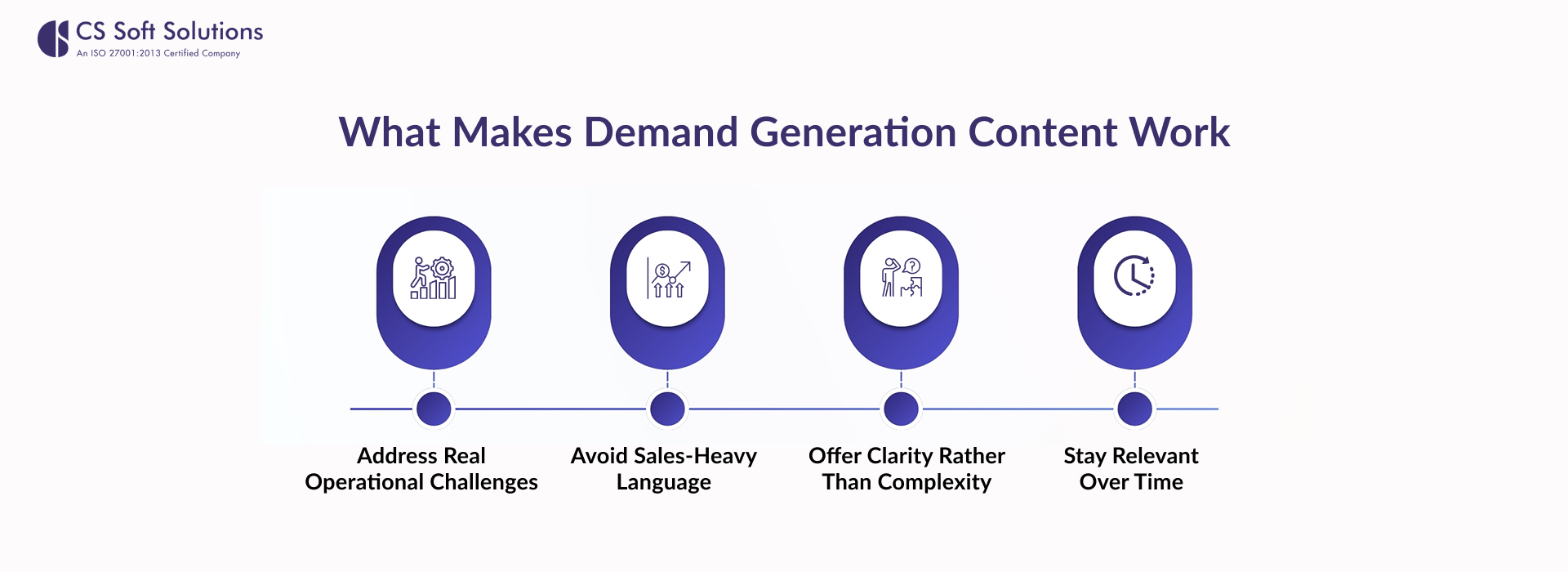
What Makes Demand Generation Content Work:
Address real operational or strategic challenges
Focus on everyday problems like weak pipelines, poor lead quality, or sales-marketing misalignment.
Avoid sales-heavy language
Explain issues clearly without pitching products or forcing outcomes.
Offer clarity rather than complexity
Simplify decisions and concepts so buyers understand them quickly.
Stay relevant over time
Create evergreen content that remains useful beyond short-term trends.
This content works quietly. It supports awareness today and conversions months later.
Sales and Marketing Alignment Becomes Easier
One of the biggest benefits of demand generation services is alignment. Sales and marketing often struggle because they measure success differently.
Demand generation creates shared context. Marketing understands sales objections. Sales understands where prospects came from.
When both teams work from the same journey map, handoffs improve. Conversations feel informed rather than introductory.
Measuring Success Beyond Lead Volume
Traditional metrics focus on counts. Demand generation shifts focus to quality and progression.
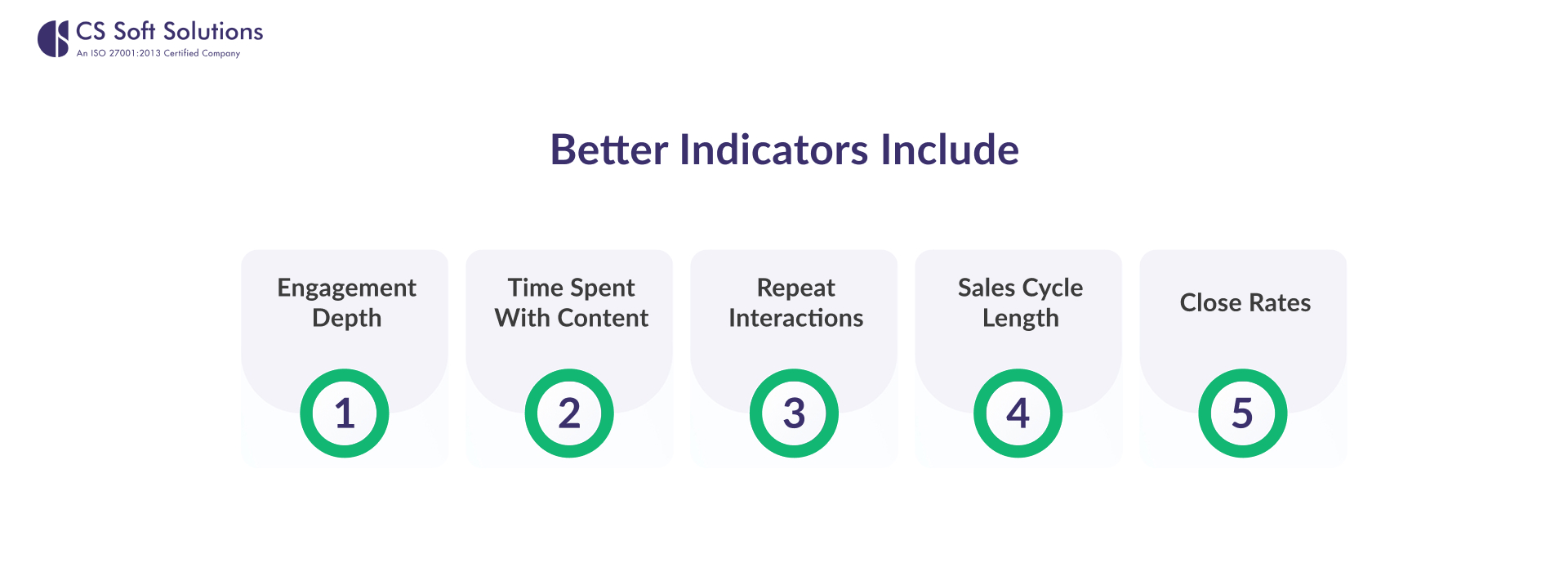
Better Indicators Include
Engagement depth
Shows how deeply prospects interact with your content, not just whether they clicked.
Time spent with content
Indicates whether readers find the information useful enough to stay and read.
Repeat interactions
Reflects growing interest as prospects return for more insights over time.
Sales cycle length
Shorter cycles often signal better education and higher buyer readiness.
Close rates
Higher close rates suggest marketing is attracting better-fit, informed prospects.
These signals show whether interest is building, not just whether forms are filled.
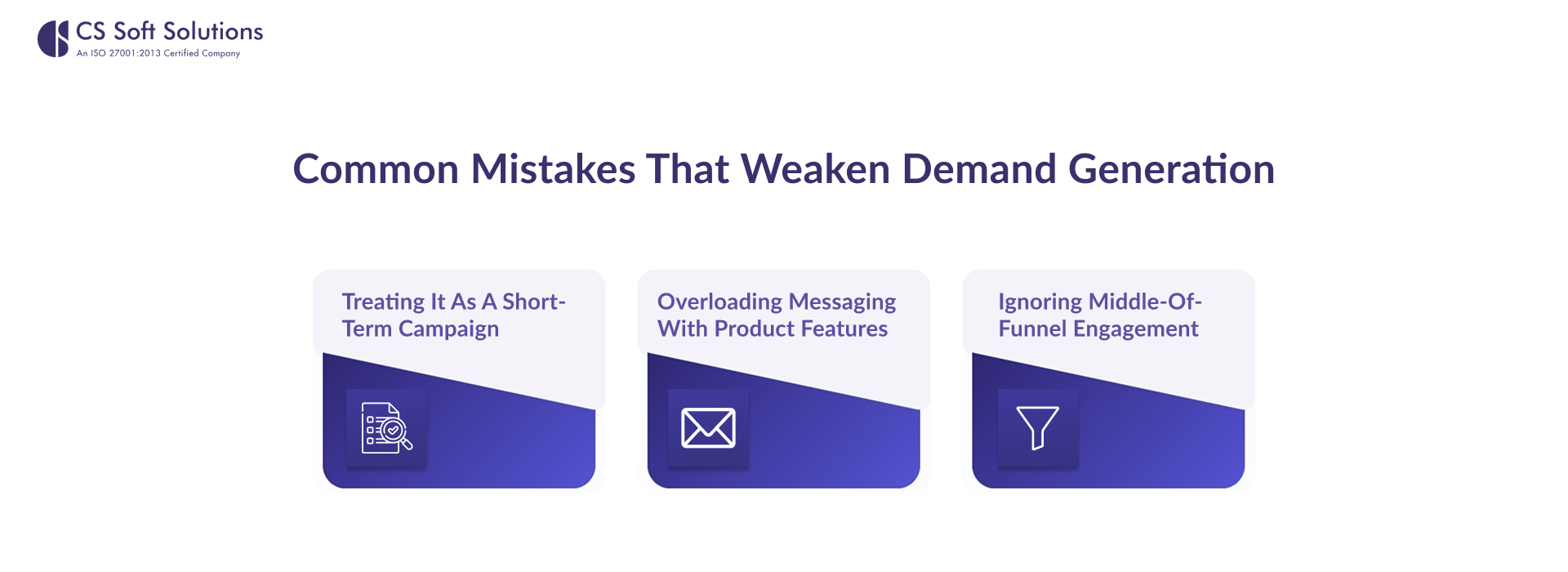
Common Mistakes That Weaken Demand Generation
Treating it as a short-term campaign
Demand generation compounds over time. Stopping early limits results.
Overloading messaging with product features
Buyers care about outcomes first. Features come later.
Ignoring middle-of-funnel engagement
Education stages often receive the least attention, yet they influence decisions the most.
Avoiding these mistakes keeps pipelines healthy and predictable.
Why Demand Generation Supports Long-Term Growth
Demand generation builds brand equity, unlike one-time campaigns. Even people who do not buy right away remember how much they got out of it.
This recognition lowers acquisition costs and raises inbound quality over time. Pipelines get more stable. Prediction gets better. Instead of reacting, growth feels controlled.
Demand Generation in a Competitive Market
Differentiation is important in industries with a lot of competition. Companies can stand out by using insight instead of noise when they generate demand.
Brands compete over how well they know their customers, not price or speed. That position is harder to copy and easier to keep.
The Role of Strategy and Execution Together
Without a plan, demand generation does not work. It also requires action to work. Both are important.
Strategy tells you who to go after, what to say, and when to say it. Execution makes sure that those ideas always get to the right people.
Successful businesses see demand generation as an operating system, not just a marketing tool.
FAQs About Demand Generation Services
How long does it take for demand generation to work?
Early engagement usually happens within a few months, but the effect on the pipeline grows over time.
Is demand generation just for businesses that sell to other businesses?
No. B2C brands also use demand generation to get people to think about their products and stay loyal to them.
Do services that create demand take the place of lead generation?
They go well with it. Creating demand makes leads better and more ready.
Do you need digital marketing strategies to create demand?
Yes. Digital channels are important for getting the word out, being consistent, and measuring success.
Final Thoughts: Building Pipelines That Do Not Depend on Luck
Timing and chance should not have anything to do with revenue pipelines. They should be built on purpose, with a clear understanding of how buyers think and make decisions.
Demand generation services give you that structure. They change pressure into relevance and noise into value. When done right, they build up momentum that sales teams can count on month after month.
CS Soft Solutions India Pvt. Ltd. takes this approach by treating demand generation as a long-term growth engine. Modern pipelines become more predictable, resilient, and scalable over time when you combine strategy, content, and digital execution.