 Why do so many businesses still bet on Android first? It’s a fair question. The mobile landscape looks crowded, iOS is polished, and cross‑platform tools promise “build once, deploy everywhere.” Yet, when you look closely at user reach, device diversity, and development flexibility, Android application development continues to hold a commanding lead, especially for teams aiming for scale, speed, and impact.
Below, we’ll unpack the “why,” explore practical implications for product teams, and share a few tactics to help you make smarter decisions, whether you’re choosing between Android app development services, iOS development services, or a mix of both with strong UI/UX services at the center.
The Real Edge: Reach, Choice, and Flexibility
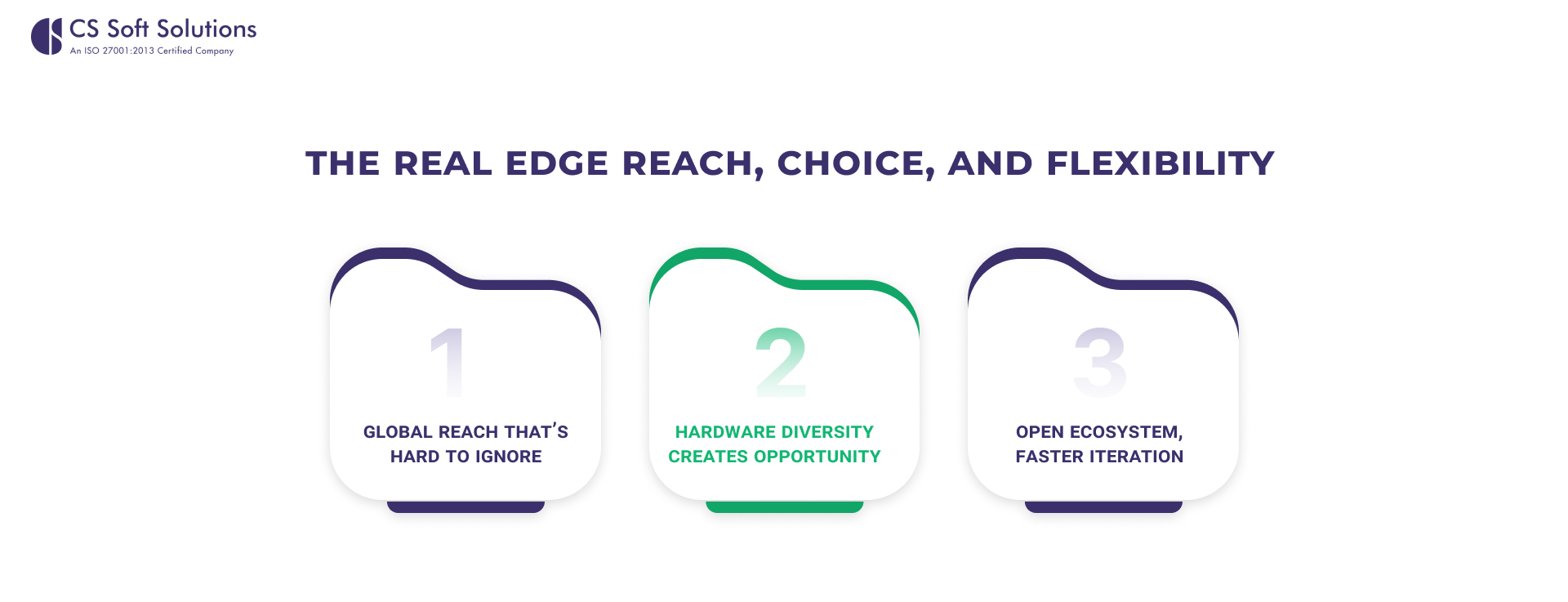
1) Global Reach That’s Hard to Ignore
Android has distribution on continents, price, and network status. Android is the surest gateway in the event your product must gain presence in various markets, urban metros, rural, and emerging economies.
- Device diversity: The ecosystem allows targeting both entry-level and power consumer segments with phones ranging in cost.
- Localization-compatible: Internationalization is also easier, where you can support different input mechanisms, languages, and regional needs.
- Offline-first designs: Android most devices are operating in environments with intermittent connectivity; the tooling of Android encourages offline resiliency to be a natural feature of a design.
2) Hardware Diversity Creates Opportunity (and Work)
Yes, fragmentation is real. Nevertheless, it is also a superpower in good hands. Android offers playgrounds to the innovator with camera modules, sensors, form factors, and foldables.
- Imagine health-technology applications based on Bluetooth devices or logistics applications based on NFC and barcode readers.
- Edge cases are product differentiation: your team can make it work on low-memory devices without sacrificing the quality experience on high-end phones
3) Open Ecosystem, Faster Iteration
Android offers openness, which allows teams to develop, test, and deliver at a more controlled level.
- Test fast: Beta channels, staged rollouts, and feature flags can have your idea tested fast and safely.
- Alternative distributions: Enterprise use cases do not even have to go to a public store and can be distributed through a private channel, or MDMs, or partner marketplaces.
- Deep integrations: Android enables deeper integrations of specialized apps, starting with the system-level services and all the way through custom permissions.
Cost, Timeline, and Maintenance: What Product Teams Care About
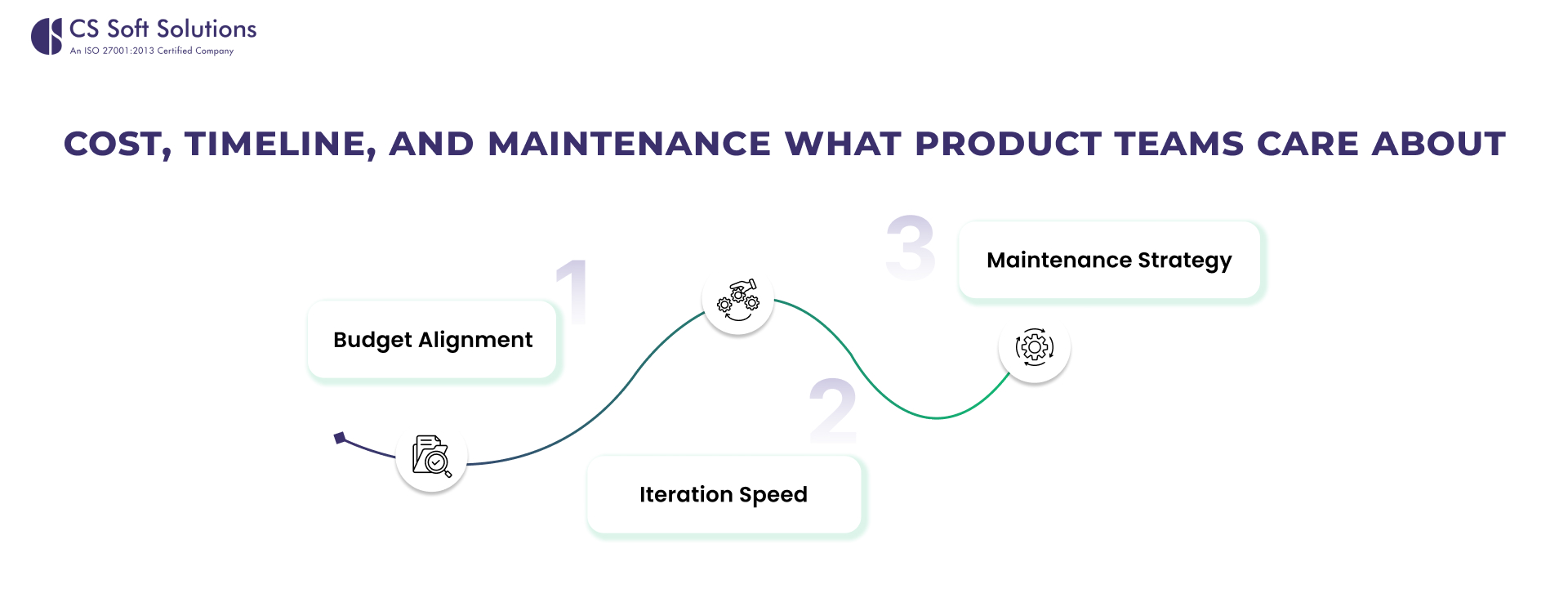
Budget Alignment
You are able to reach large masses without excessive per-user acquisition price. The tooling of development (Kotlin, Jetpack, Android Studio) is developed, and the pools of hiring are general. Android App development services can also be significantly faster to create MVPs when integrating hardware or market diversity is the focus of the strategy, with a fresh start.
Iteration Speed
Android provides granular control over versions and rollouts. Feature flags and staged releases let you learn from the field without risking your entire user base. This feedback loop is a gift for teams that prototype ambitiously and iterate relentlessly.
Maintenance Strategy
Supporting multiple OS versions and device profiles is challenging without sugarcoating it. But modern patterns (MVVM, Jetpack Compose, modular architecture) and automated testing pipelines narrow the gap. Well-designed apps age gracefully when you invest early in architecture, performance budgets, and testing across tiers.
iOS vs. Android: Choosing With Clear Trade-offs
It’s not about Android vs. iOS as rivals. It’s about fit for purpose.
- iOS shines in tightly controlled hardware environments, consistent UI standards, and premium user segments. That’s why iOS development services remain essential for certain markets (finance, lifestyle, high-end commerce).
- Android wins when reach, device diversity, and platform freedoms matter. For products that depend on regional adoption, hardware integrations, or inclusive pricing, Android is tough to beat.
- Cross-platform pragmatism: If your roadmap prioritizes speed to market with shared code, start cross-platform but design your UI/UX Services to respect each platform’s native patterns. “Feels right” beats “looks the same.”
Design Matters More Than Code: UI/UX Services as a Force Multiplier
A common mistake is treating Android as purely an engineering decision. In reality, UI/UX Services are what turn reach into retention.
Design for Real Contexts
- Variable screens, input: Change between compact screens to foldables and tablets.
- Performance-conscious UI: Lightweight animations, lazy loading, and meaningful skeleton screens maintain the experience on mid-tier devices.
- Accessibility as a floor: Larger tap targets, adaptable fonts, correct contrast, and the talkback assistance are not characteristics of the nice. They are between inclusion and attrition.
Compose Your Way to Consistency
Jetpack Compose lets teams build fast, test reliably, and evolve design systems with fewer regressions. It enables component-driven design where behavior, styling, and accessibility live together, reducing UI debt over time.
Practical Playbook: Building Android Apps That Scale
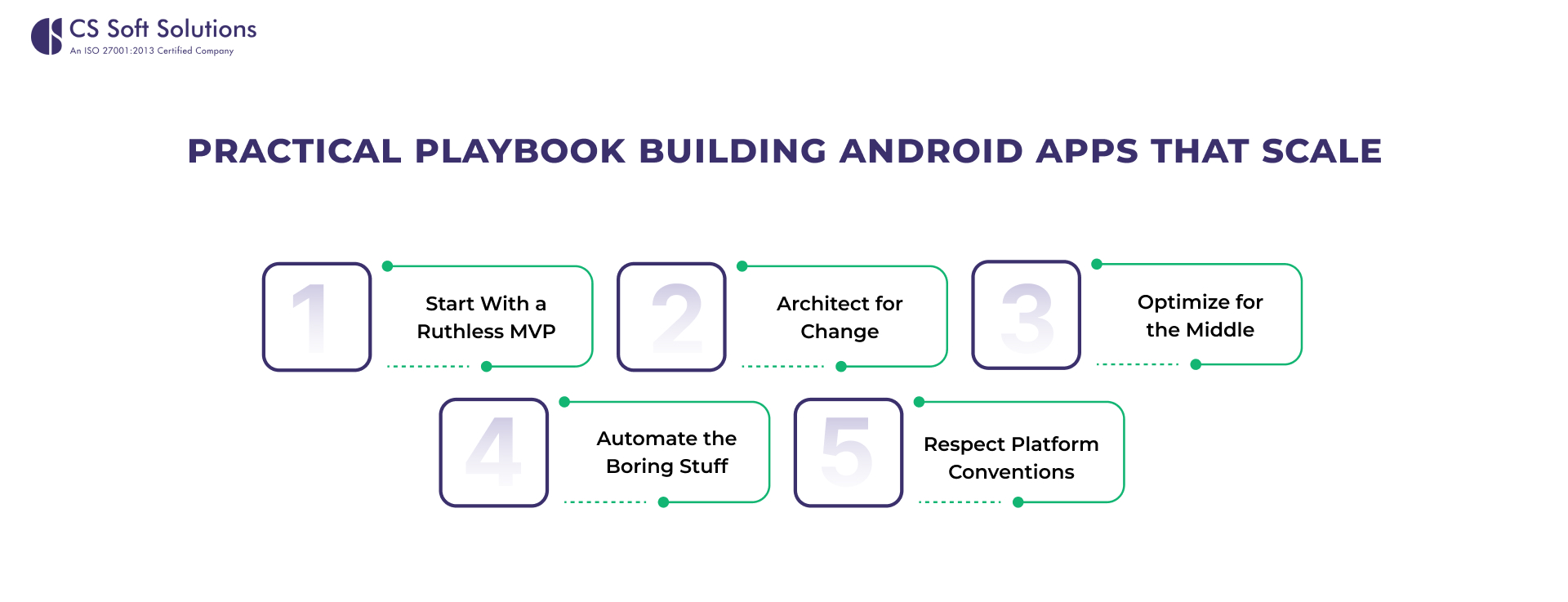
1) Start With a Ruthless MVP
Launch with the smallest version of your core value. Map your feature set to real devices and real bandwidth. Gather field data fast.
2) Architect for Change
- Clean modules: Separate domain logic, data layers, and presentation.
- Offline-first: Cache aggressively, sync intelligently, and fail gracefully.
- Observability: Use structured logs, crash analytics, and performance tracing from day one.
3) Optimize for the Middle
Don’t over-index on the newest flagship. Tune for the middle 60% of devices (RAM, CPU, GPU). Keep image sizes reasonable, prefetch only what matters, and defer heavy work.
4) Automate the Boring Stuff
-
- CI/CD pipelines: Linting, unit tests, instrumented tests, and staged rollouts.
- Device farms: Test against a matrix of screen sizes and OS versions.
- Feature flags: Experiment safely without full version bumps.
5) Respect Platform Conventions
Design navigation, gestures, and settings the Android way. Users expect familiarity. That trust translates directly into lower churn and higher ratings.
Common Missteps
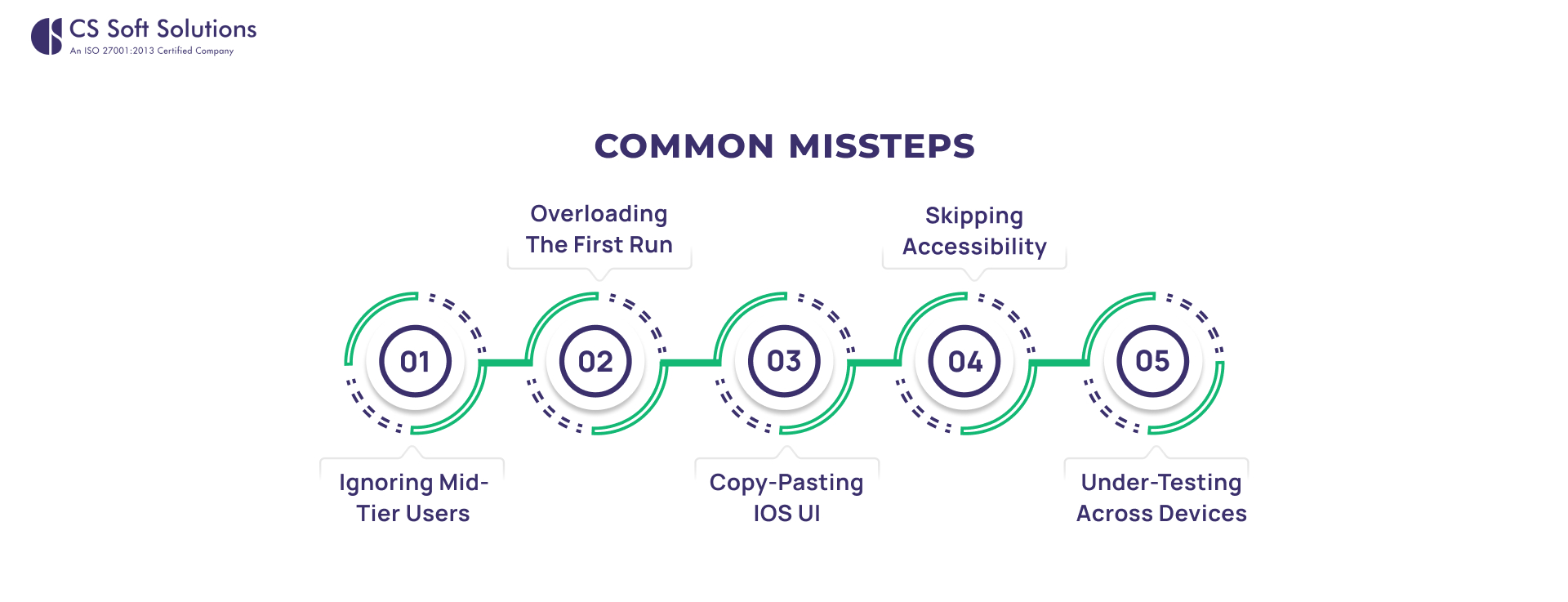
- Ignoring mid-tier users: Designing only for high-end devices leads to slowdown and uninstalls.
- Overloading the first run: Onboarding should be brisk. Ask for permissions when needed, not all at once.
- Copy-pasting iOS UI: Android has its own patterns. Respect them.
- Skipping accessibility: It’s not optional. It’s a growth lever.
- Under-testing across devices: Emulators are great; mixed device testing is better.
When to Choose Android First
Opt for Android first if you need:
- Broad geographic coverage and inclusive pricing.
- Deep hardware integrations (camera, NFC, Bluetooth accessories).
- Flexible distribution models (enterprise or partner channels).
- Rapid experimentation with granular rollouts.
Pair it with robust UI/UX Services and, when needed, extend with iOS development services for parity in premium segments.
SEO-Friendly Takeaways
- Android App Development Services are ideal for businesses prioritizing reach, flexibility, and faster iteration cycles.
- Android application development benefits from device diversity when approached with sound architecture and thoughtful design.
- UI/UX Services act as the multiplier: accessibility, performance-conscious layouts, and platform-native patterns turn downloads into loyalty.
- iOS development services remain essential for premium markets and leadership dashboards chosen based on audience and role.
Summary & Next Steps
Android’s dominance isn’t an accident. It’s the outcome of global reach, open tooling, and hardware diversity that lets teams design for the real world, not just ideal conditions. If your roadmap depends on inclusive adoption, localized experiences, and steady iteration, Android should be your starting point. Complement that with strong UI/UX services and bring in iOS development services strategically where they make sense.
Ready to explore a practical path for your product?
- Map your audience to device segments and network realities.
- Define a minimal, resilient Android MVP.
- Invest early in testing, accessibility, and performance budgets.
- Add iOS when user roles or market signals justify it.
CS Soft Solutions India Pvt. Ltd. can help you plan a balanced, evidence-based approach. It begins with an exploration of an architecture and design system that is scalable. In case you need a rapid audit or MVP blueprint, your target market, key features, and timelines, you can have a lean, testable roadmap that we outline to fit your goals.