Cyber Security Explained: CISM, ISMS & ASPM Guide

Sep 17, 2026
7 min

Antivirus software and a firewall used to be enough to call a business “secure.” That’s no longer true. Applications now run in the cloud, APIs connect systems that were never meant to work together, and dev teams ship code quicker than most internal security teams can vet it. Defending an enterprise today is more than perimeter defences, it is security leadership, defined processes, visibility into application behaviour and support that doesn’t disappear after work hours.
Four concepts are coming together here. A Certified Information Security Manager (CISM) offers the governance and leadership viewpoint. Managed cyber security services allow an organization to monitor and respond to threats around the clock. Application security posture management (ASPM) gives teams insight into where application risk truly exists. This is where the information security management system (ISMS) comes in: a repeatable, auditable framework. Business and IT leaders can see how the pieces fit together for investment decisions.
What Is a Certified Information Security Manager?
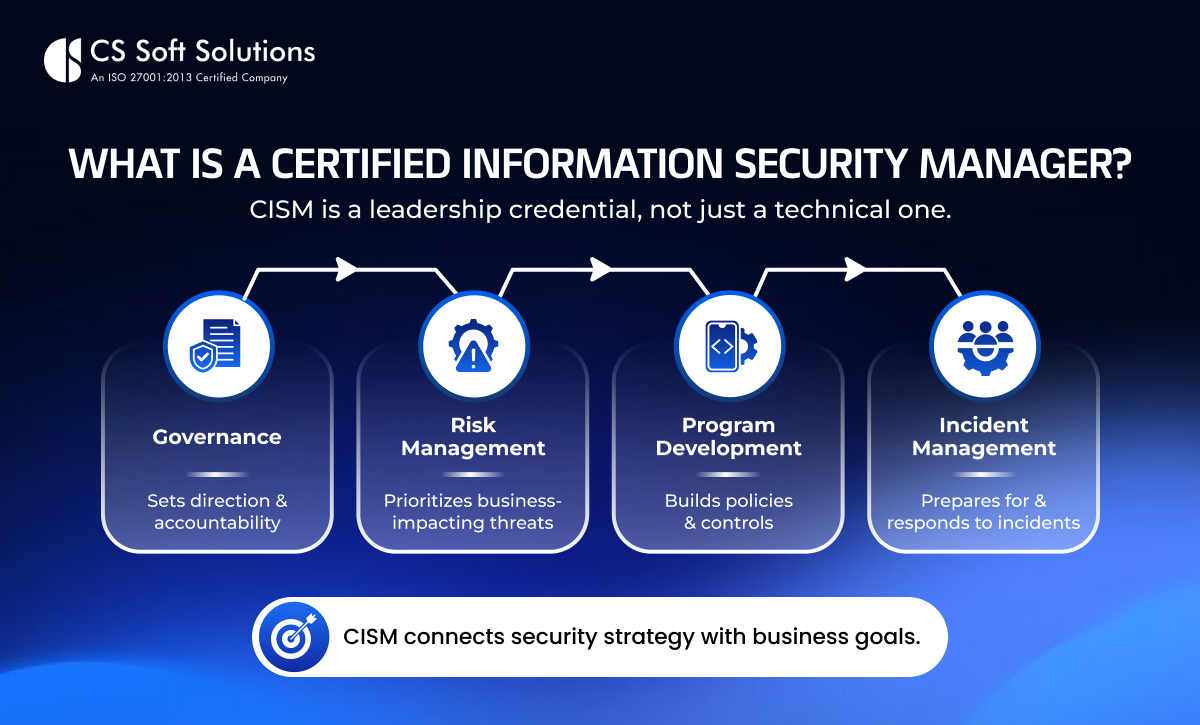
A Certified Information Security Manager is a cybersecurity professional with the CISM certification, a certification that is more focused on the management aspect of cybersecurity rather than the technical aspects. Unlike many certifications that examine the ability to perform hands-on technical tasks, CISM is centred around governance, risk management, program planning and incident management – areas where security decisions meet with business interests.
Core Areas of Focus
Core responsibilities usually include:
- Information security governance establishing accountability and reporting structures
- Risk management identifying and prioritizing threats based on business impact
- Security program development building the policies and controls that support daily operations
- Incident management preparing for, responding to, and learning from security events
Connecting Security to Business Strategy
Usually, the security strategy of an organization is defined by a leader who is CISM-certified, i.e., one that sets policy direction, determines the acceptable level of risk, and makes sure that security investments address the real protection needs of the business. This kind of leader doesn’t function in a vacuum; he or she turns technical discoveries into judgements that executives and boards can act on.
Business readers who lack a technical background are best served by thinking of a CISM specialist as a bridge between the technical realities of doing security work and the operational and financial realities of operating an organization.
Why Choose Managed Cyber Security Services?
Cyber security managed services are when an organization contracts with a security company to do some or all of their security monitoring and response. Instead of developing all the capabilities in-house, organisations hire a dedicated team that provides ongoing surveillance, threat detection, vulnerability management, incident response, and periodic security assessments.
Closing the Internal Expertise Gap
For organizations without a large internal security staff, this arrangement closes meaningful gaps. Threats don’t wait for business hours, and few internal teams can realistically staff around-the-clock monitoring on their own. A managed provider offers continuous coverage along with specialized expertise that would otherwise take years to build internally.
Key Benefits
The practical benefits tend to fall into a few categories:
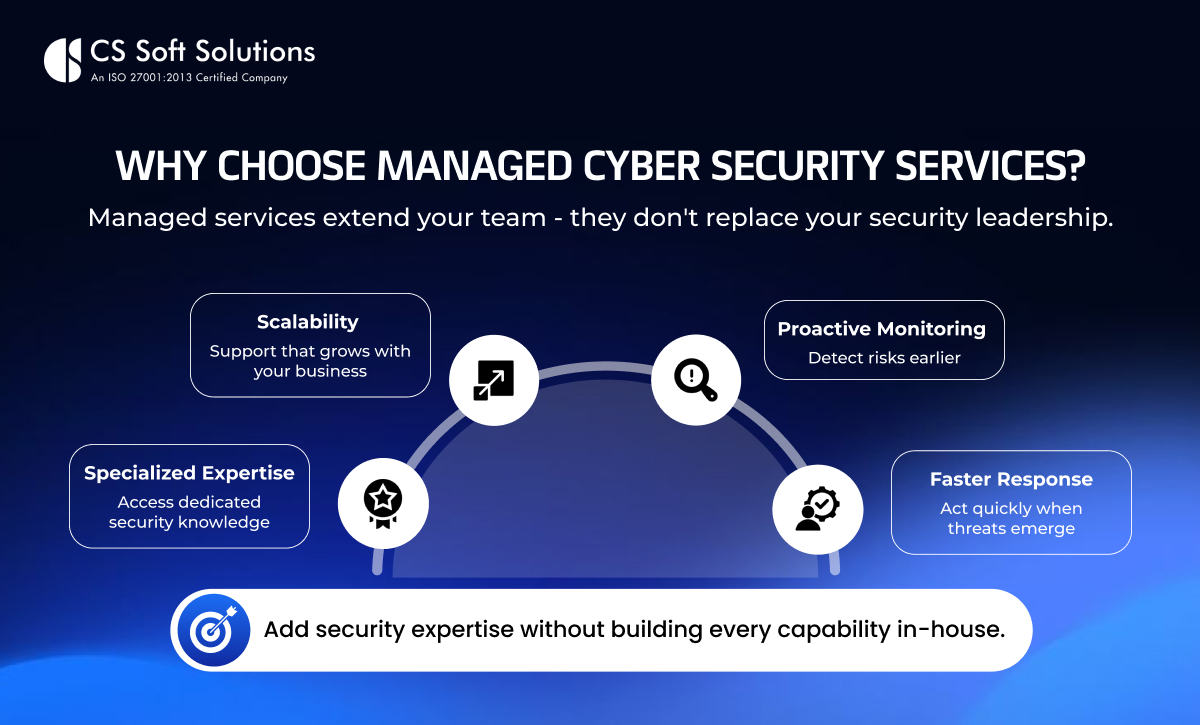
- Scalability: Security coverage that grows or shrinks with the organization’s needs
- Proactive monitoring: Identifying unusual activity before it becomes a larger incident
- Specialized expertise: Access to skills across multiple security disciplines
- Faster response: Established processes for containing and addressing incidents
Where Managed Services Fit In
Many organizations pair managed services with periodic cybersecurity consulting engagements, using outside expertise to assess current posture, test assumptions, or plan larger security initiatives. It’s worth being clear-eyed here: managed services reduce risk and extend capability, but they don’t eliminate it. They work best as a complement to internal security governance, not a replacement for it, someone within the organization still needs to own overall security direction.
Understanding Application Security Posture Management
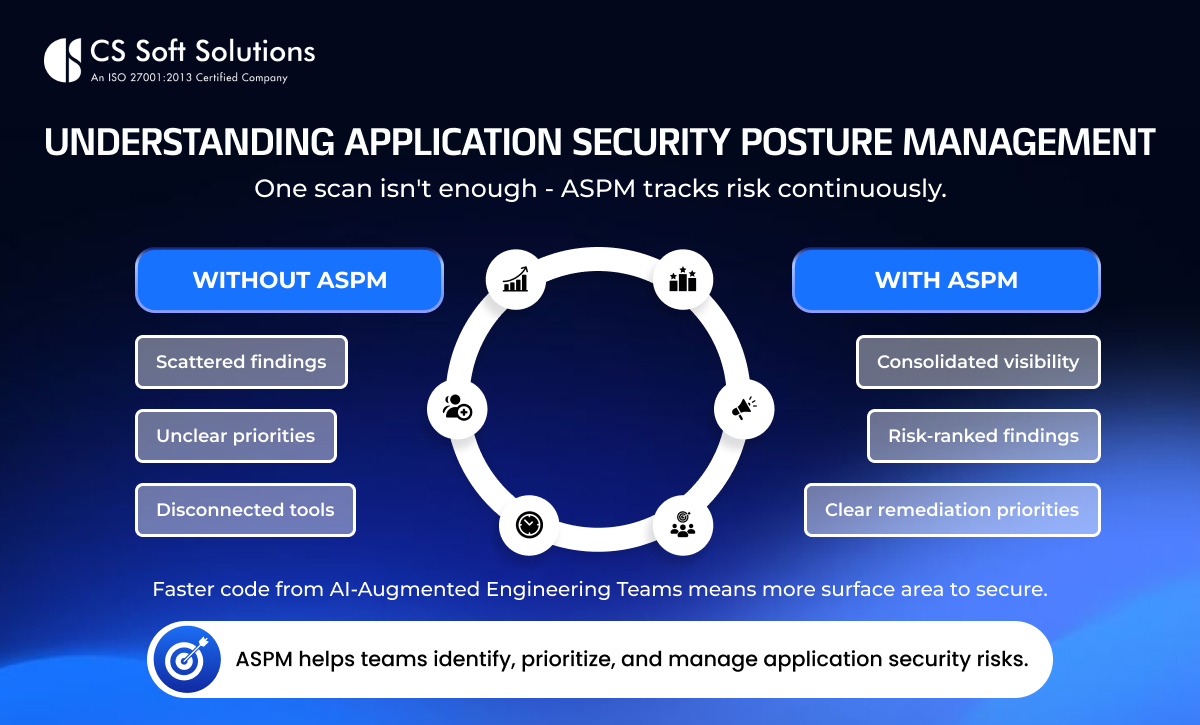
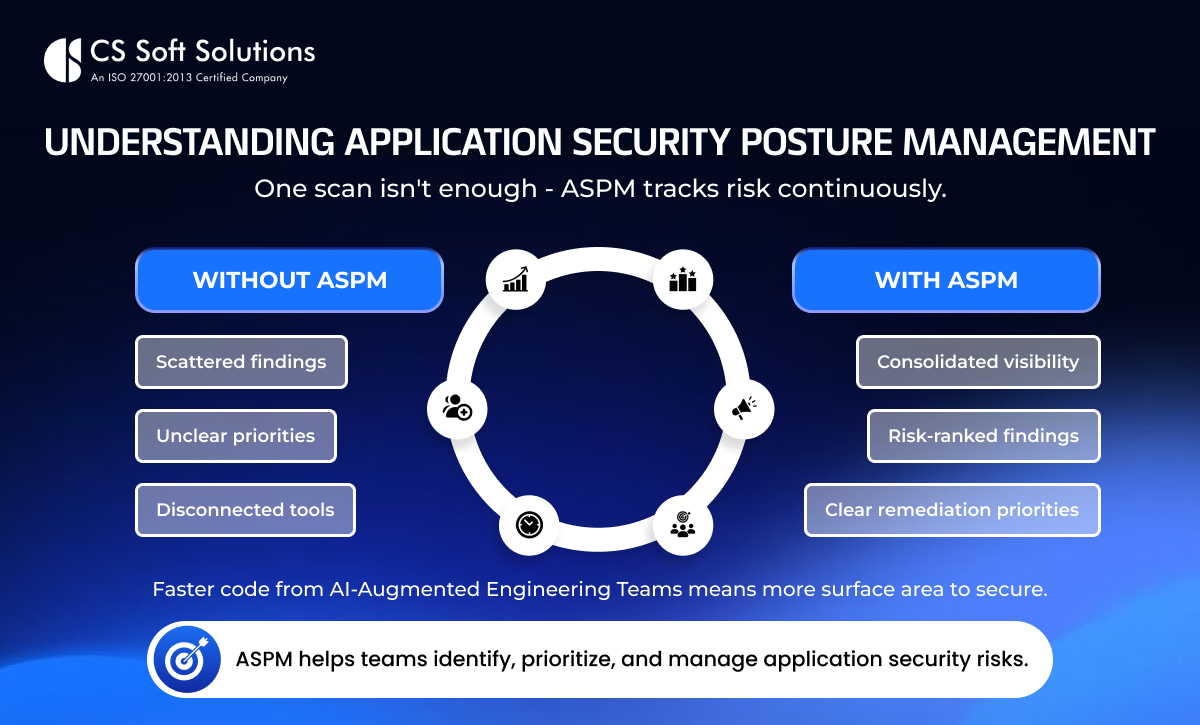
Application security posture management (ASPM) is the ongoing assessment and management of application security posture across the full application lifecycle from development to production. Instead of depending on a single scan or a point-in-time audit, ASPM tools and processes collect results from numerous sources to give teams a continuous perspective into where application risk occurs.
Why Application Security Has Grown More Complex
Applications are a combination of custom code, open-source components, APIs and cloud infrastructure, and are generally maintained by DevOps teams who deliver frequent updates. That intricacy means it’s simple for vulnerabilities to slip through the cracks without a centralised way to track them. ASPM helps by integrating findings from several tools into one location, prioritising what vulnerabilities provide the greatest actual danger, and giving teams a clearer path to remediation rather than a broad, undifferentiated list of issues.
AI-Augmented Engineering Teams and Application Risk
This is another element to put here: the rise of AI-assisted development. AI-Augmented Engineering teams can write code faster and iterate faster, but that increase in output also implies more surface area to review. AI-generated code isn’t intrinsically less safe, but it needs the same attention as any other code, possibly more, considering the pace it’s produced at. Strong ASPM processes enable organisations to maintain pace with that increased velocity, rather than lag behind it.
Building an Information Security Management System
n information security management system (ISMS) is a systematic approach a company can take to identify, assess, manage and mitigate its information security threats over time. An ISMS turns security from a series of one-off projects into an ongoing, documented, repeatable process that is assessed routinely.
Core Components of an ISMS
A typical ISMS includes several interconnected components:
- Security policies that define expectations and responsibilities
- Risk assessments that identify where the organization is exposed
- Security controls designed to address identified risks
- Access management to limit who can reach sensitive systems and data
- Employee security awareness programs
- Incident management procedures
- Documentation supporting audits and accountability
- Ongoing monitoring and continuous improvement
Aligning with Recognized Frameworks
Many organizations build their ISMS around recognized frameworks such as ISO/IEC 27001, which provides a standardized set of requirements and controls, giving the organization a proven structure rather than starting from scratch.
Evolving Alongside AI Adoption
An ISMS also needs to evolve. As technology changes and the organization’s risk profile shifts, the system built to manage that risk should shift with it. This is especially true as organizations adopt AI tools. Considerations like ai gateways secure model deployment are becoming a standard part of ISMS planning organizations need a way to govern how AI models are accessed, what data they can reach, and how that access is monitored, much like they already govern access to any other sensitive system. Framed this way, AI governance isn’t a separate initiative; it’s an extension of the risk management and governance principles already built into the ISMS.
Conclusion
CISM, managed cyber security services, ASPM, and an ISMS each address a different layer of an organization’s security strategy. A CISM-certified leader provides governance and direction. Managed services extend monitoring and response capacity. ASPM brings visibility into application-level risk. An ISMS brings together rules, controls, and processes into an auditable and continually improving framework.
None of these work very well on their own. Effective cybersecurity is a mix of people, processes, governance, and technology, with that mix being constantly monitored and adjusted as the firm takes on new cloud services, APIs, development methods, and AI capabilities.
If your company hasn’t taken a hard look at how these pieces fit together in a while, it’s usually a hint that it’s time. It makes sense to start by evaluating your present security posture and identifying where you might need more expertise or assistance to strengthen it. Working with an experienced technology partner such as CS Soft Solutions India Pvt. Ltd can also help organizations assess their requirements and develop a security approach that aligns with their operational and technology goals.
 Enterprise security standards