Enterprise Software Development Services: 7 Key Factors to Consider Before Choosing a Development Partner

Nov 24, 2026
7 min
Enterprise software selections are far more than just a technology stack or the cost of development. A new platform might need to integrate with existing systems. Also serve thousands of users, protect sensitive data, and react to evolving business requirements. Choosing the incorrect development partner can lead to technical debt, integration problems and expensive delays.
Businesses opting for enterprise software development services need to consider the technical knowledge. Also include industry experience and long-term growth support capability of a supplier. This is especially true for SaaS enterprises handling subscription platforms, client data, cloud infrastructure and continuous product updates.
Here are 7 crucial things to ponder before selecting an enterprise software development partner.
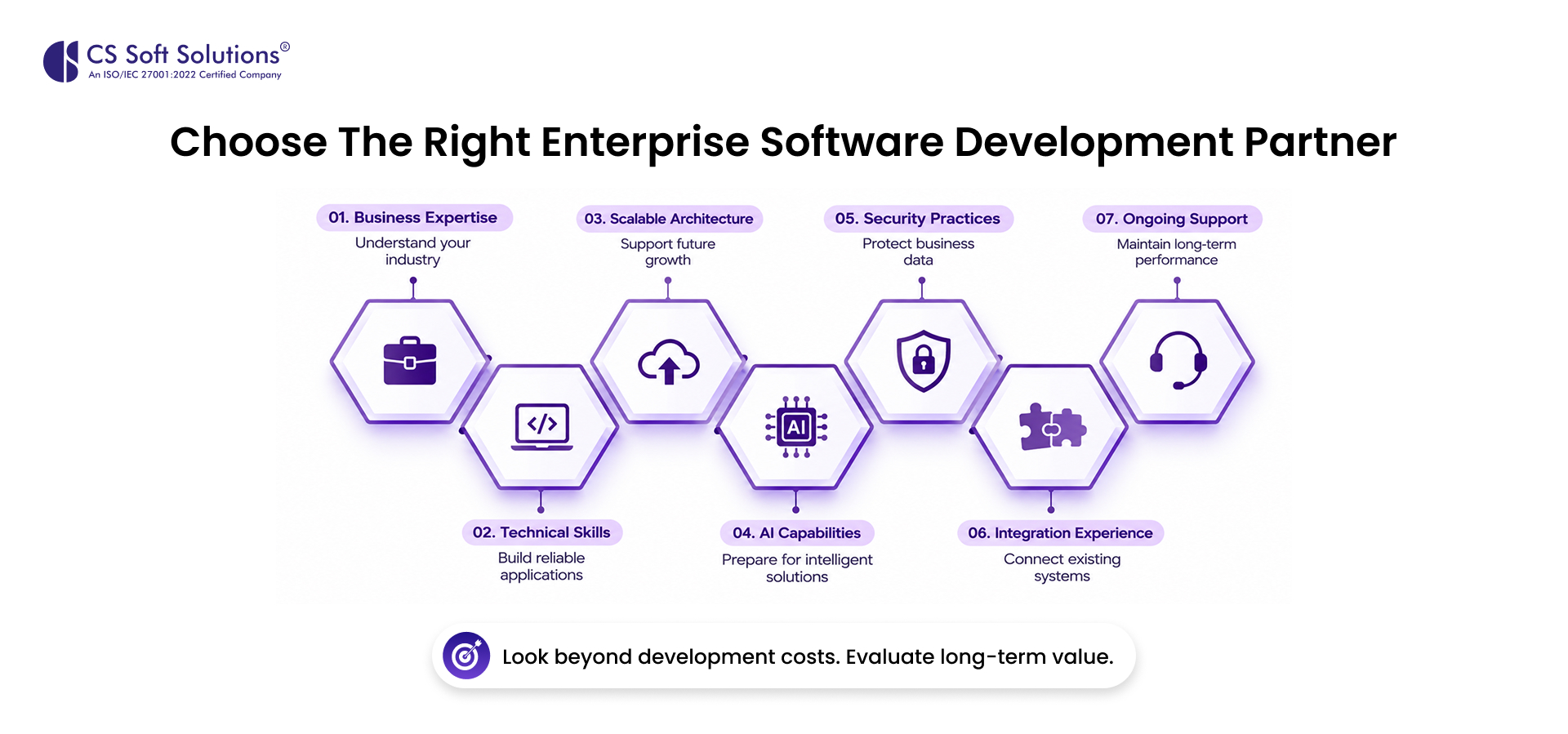
1. Business Understanding and Industry Experience
A development partner should grasp the business challenge. Especially before suggesting a technical solution.
Look Beyond the Project Requirements
Say a SaaS company wants to automate customer onboarding. The project may include CRM integration, identity verification, subscription billing and user permissions. A development team must understand the associated procedures before creating the solution.
Look for a partner who:
- Understands your business model and customer needs.
- Identifies operational challenges and dependencies.
- Defines clear project objectives.
- Recommends features based on business priorities.
Pertinent Project Experience Review
Ask for case studies in similar industry or technological problems. Understand what the supplier built, how they approached the project, and what business criteria they addressed.
2. Technical Expertise and Scalable Architecture
Enterprise systems need to adjust to shifting workloads, more users, and new integrations. Their architecture should not make maintenance unduly complicated and should allow for development.
Evaluate Architecture Decisions
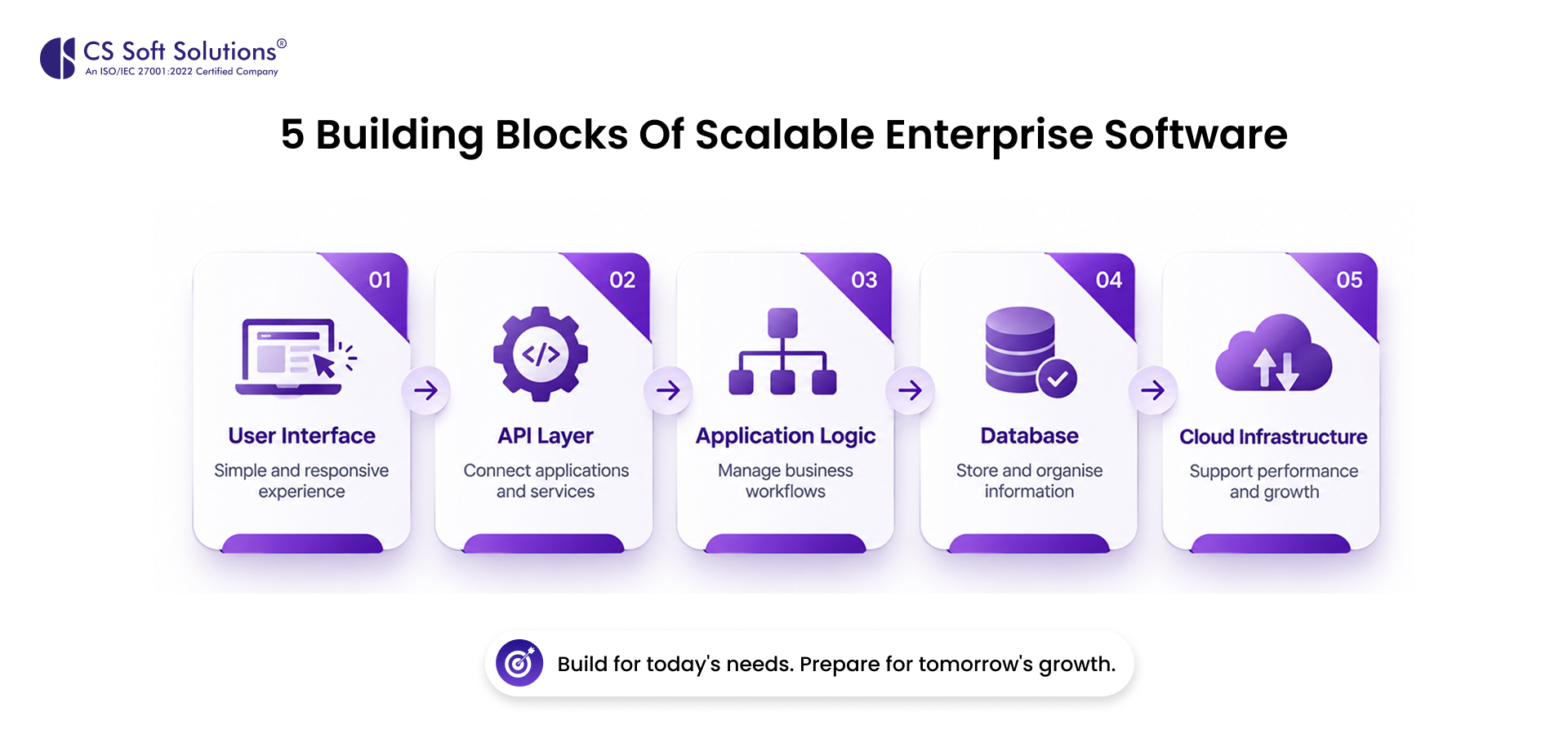
A good development partner must understand cloud infrastructure, API design, database administration, and application architecture.
The solution might be based on modular architecture or microservices depending on the project requirements. Microservices allow individual components to scale independently, but can increase operational complexity. The best decision relies on the size of the application and business requirements.
Consider Long-Term Maintainability
Ask about the team’s approach to documentation, code quality, testing and future improvements. Strong enterprise custom software development should build a base for new features and integrations to be added without excessive rework.
3. AI Readiness and Emerging Technology Capabilities
AI is becoming a key component of enterprise software planning However, introducing AI without knowledge of the current systems may result in more issues than benefits.
What to Evaluate in AI Readiness Assessments
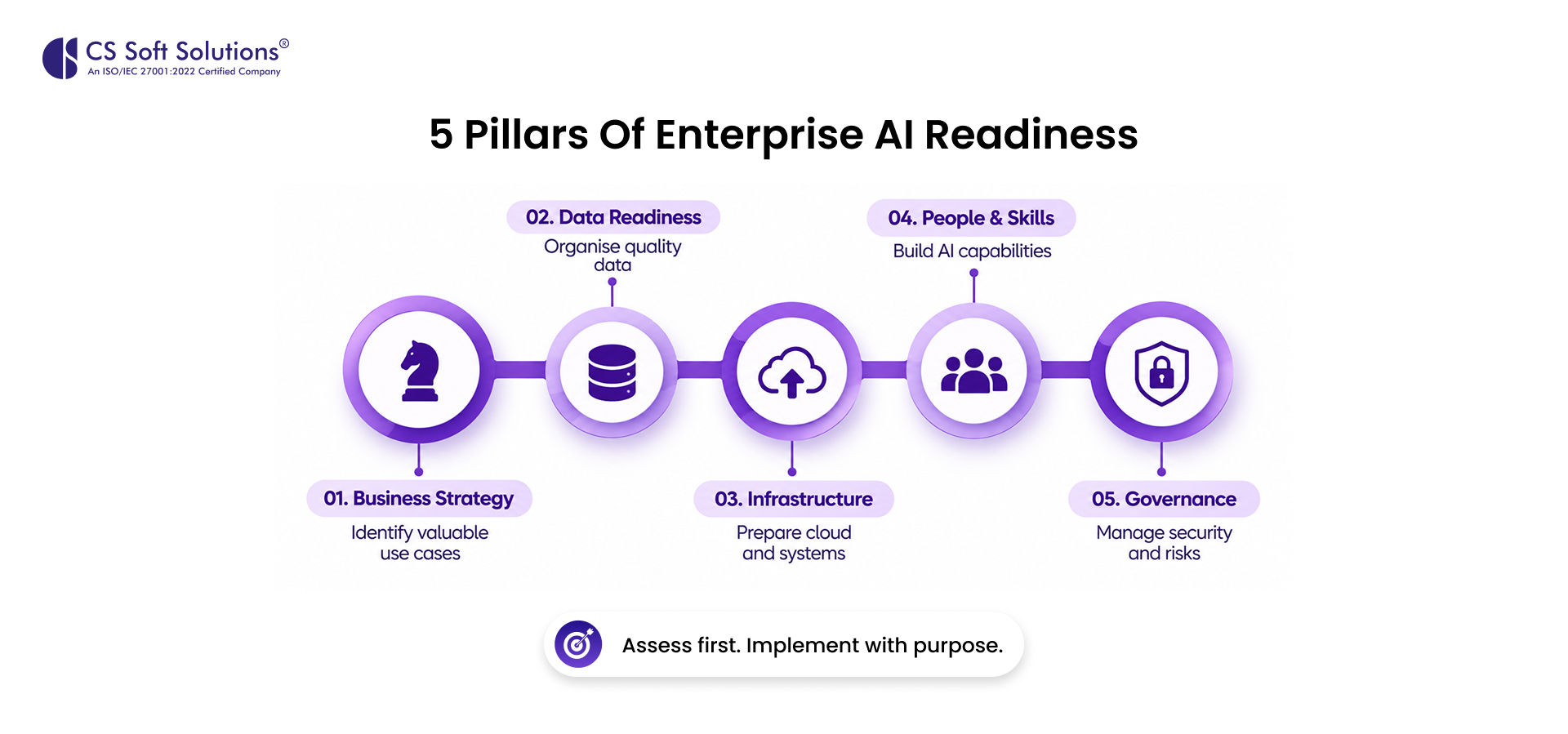
When comparing ai readiness assessments for enterprises providers, examine whether their approach covers:
- Business use cases and expected outcomes.
- Data quality and accessibility.
- Existing infrastructure and cloud capabilities.
- Internal skills and operational readiness.
- Security, governance and responsible AI.
A useful assessment should identify gaps and provide a practical implementation roadmap.
Focus on Business Value
A SaaS organization may seek an AI-driven customer care assistant. But its customer information may be spread over CRM data, helpdesk tickets and internal papers.
Organizing this information and setting up access restrictions may need to be done before AI is introduced.
4. Enterprise RAG Query Rewriting Systems and Data Integration
Generative AI applications need access to relevant information from enterprise knowledge sources. And it’s very hard when data is scattered across multiple papers, databases and internal apps.
Why Query Rewriting Matters
Retrieval-augmented generation (RAG) is a combination of language models and external knowledge sources. Enterprise rag query rewriting systems can convert vague or conversational questions into targeted search queries, enabling computers to get more relevant information.
For example, an employee asking about a client renewal may require data saved in a contract record, project name or meeting document. Query rewriting helps link the question to appropriate search phrases.
What Makes RAG Systems Reliable?
A dependable RAG solution also requires:
- Consistent document indexing and metadata.
- Appropriate document chunking.
- Access controls for sensitive information.
- Retrieval relevance evaluation.
- Source-grounded responses.
- Accuracy and performance monitoring.
These capabilities can support SaaS knowledge assistants, customer support tools and enterprise document search.
5. Security, Compliance and Quality Assurance
Enterprise apps generally deal with financial information, employee records and sensitive customer data. Security should consequently be a development consideration.
Review Security Practices
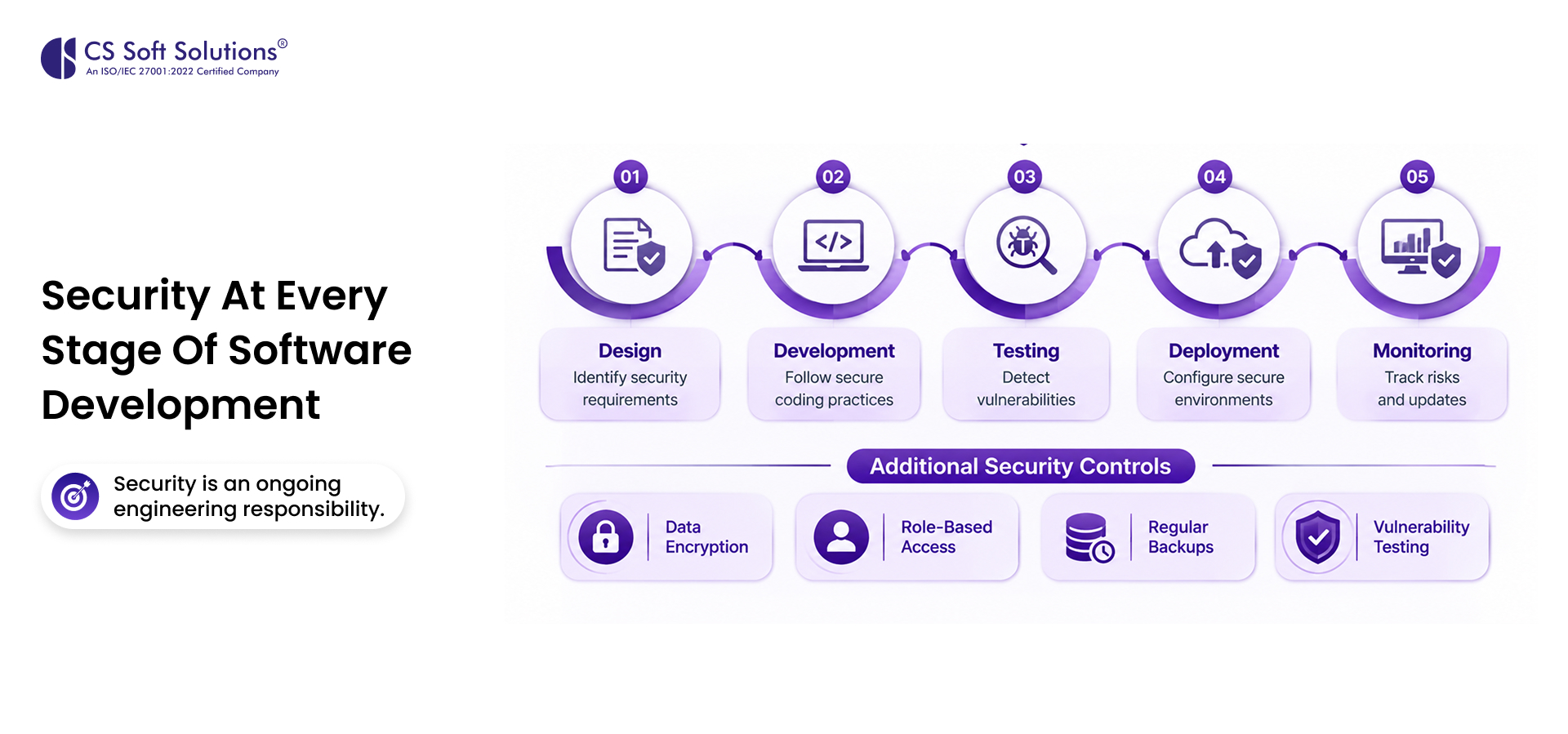
Ask potential partners how they deal with authentication, data encryption, access rights and vulnerability management.
Also examine their practices for:
- Secure coding and code reviews.
- Security and penetration testing.
- Backup and recovery planning.
- Incident response.
- Relevant compliance requirements.
While certifications could suggest process maturity, organizations also need to understand how security measures are applied across projects.
Examine Quality Assurance
The testing must encompass functionality, integrations, performance and security.
A SaaS platform, for example, might work OK for administrators, but fail when multiple users try to access the same account at the same time. Testing of performance and user roles can discover these issues before launch.
6. Mobile App Development Company Capabilities and Integration Experience
Enterprise software is moving to run across browsers, cellphones and internal business platforms. A platform can require a web interface for administrators and mobile applications for employees or customers.
Assess Mobile Development Expertise
If mobile access is on your roadmap, check the provider’s understanding of native and cross-platform development.
A good mobile app development company should have experience in application security, API connectivity, device compatibility and mobile user experience.
Check Third-Party Integrations
Enterprise applications commonly connect with:
- CRM and ERP platforms.
- Payment and billing services.
- Identity management systems.
- Analytics and reporting tools.
Ask how the supplier manages API integration, data sync and unsuccessful transactions. Reliable connections get rid of redundant records and inconsistent business information.
7. Communication, Delivery Model and Long-Term Support
Even a good team might technically be challenged by ambiguous responsibilities and communication. Enterprise projects have many stakeholders, changing priorities and continuous decisions.
Know the Delivery Process
Ask about team setup, sprint planning, progress reporting and escalation procedures. Discuss working-hour overlap, and communication routes. Including project ownership for offshore or remote teams.
Post Launch Support Evaluation
Software needs some TLC once it gets out. Maintenance might involve security upgrades, bug patches, performance monitoring, cloud optimization and feature development.
Ask if the service provides documentation. Also knowledge transfer and continuous support. These arrangements help corporations retain control as their applications grow.
Frequently Asked Questions
How do businesses evaluate enterprise software development partners?
Compare technical expertise, relevant project experience, architectural capabilities, security practices, communication and post-launch support. You can show that a provider understands your requirements by going through case studies and talking about genuine project scenarios.
Should enterprises choose custom software or an off-the-shelf platform?
The decision depends on workflows, integration requirements, scalability and cost. Off-the-shelf platforms may suit standard processes. Especially while custom software solutions can support specialised requirements that existing products cannot address effectively.
Select a Development Partner for Long-Term Business Growth
Finding a tech partner is about finding a team that balances business needs with good engineering judgment. Industry experience, scalable architecture, AI capabilities, security and reliable communication all play a part in project success.
The best enterprise software development services should meet the current operational needs and help the organization flourish in the future.
CS Soft Solutions India Pvt. Ltd. provides services in enterprise engineering, SaaS and product development, AI and data engineering, cloud modernization, mobile applications, and quality assurance. The company supports organizations developing, integrating and scaling digital platforms using structured, AI-assisted development techniques, supported by more than 16 years of engineering experience and a staff of 500+ engineers.
 Enterprise security standards