From Planning to Launch: What Are the Key Stages of the Web Development Process?

Nov 18, 2026
8 min
A successful website rarely comes together through design and coding alone. There are a lot of decisions behind every successful digital platform, regarding business objectives, user expectation, technicalities as well as long-term performance. Every stage is significant to the successful completion of the product. Likewise, how adaptable it is as the business expands.
This is especially crucial for SaaS businesses. They’re usually tasked to run product demos, customer onboarding, subscription management, integrations, and feature updates and enhancements. A well-defined web development process can help the teams meet these requirements without sacrificing the customer experience.
Whatever, whether a business is creating a new website, developing a SaaS platform or upgrading an existing application. Just knowing the stages of development can help manage expectations, budget and the elimination of unnecessary delays.
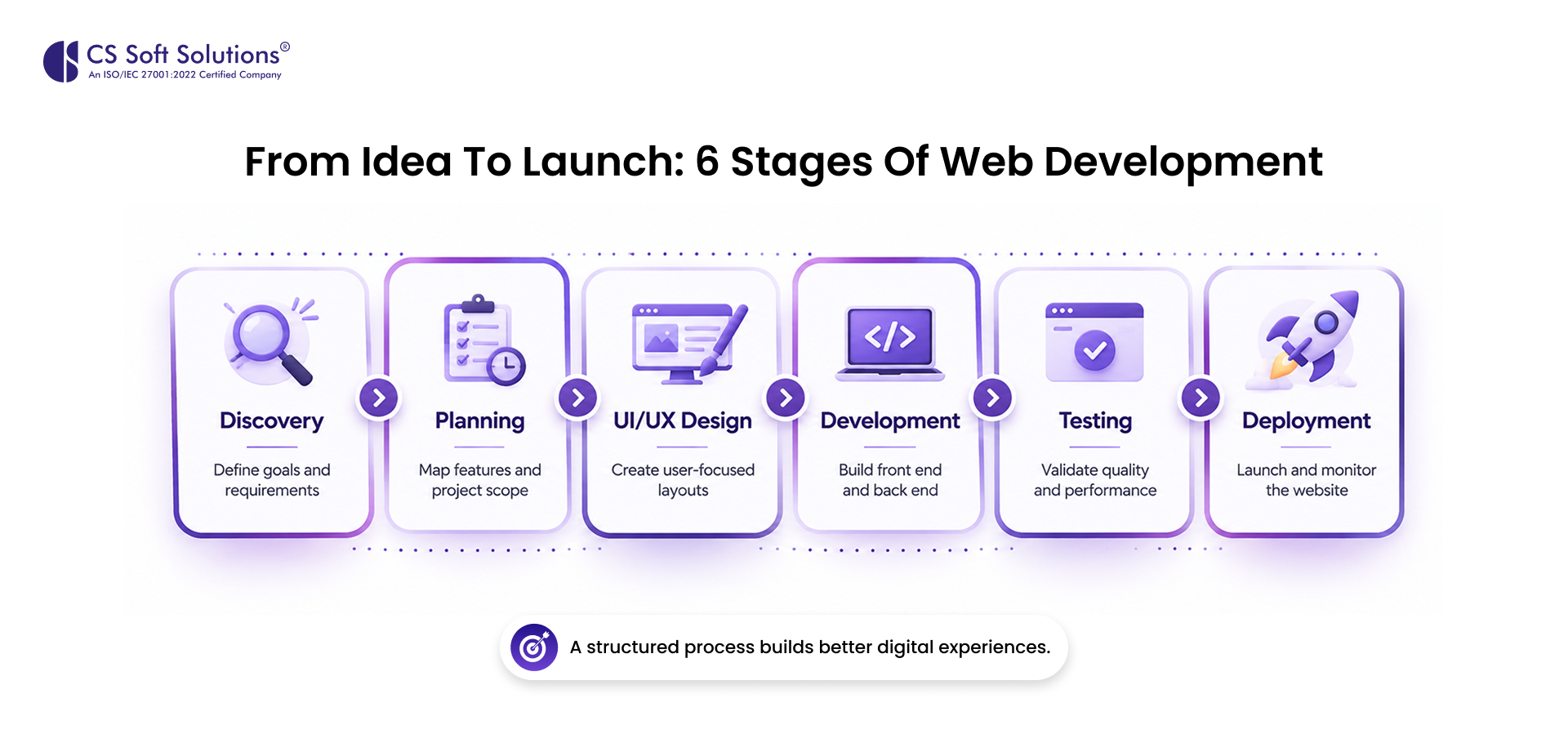
1. Strategy and Discovery: Define What the Website Needs to Achieve
All projects should start with a well-defined problem to be solved. Development teams must grasp the business model, target audience and anticipated outcomes. That is before deciding on a technology stack. Even engaging in a discussion about visual layouts.
This stage usually involves discussions around:
- Business goals and project objectives.
- Target users and their expectations.
- Existing website or application limitations.
- Required features and integrations.
- Budget, timelines and technical constraints.
- Performance and security expectations.
For SaaS businesses, factors such as subscription models, user roles, and onboarding journeys. Also future product requirements should also be analyzed. Different types of websites have different needs and requirements. It can be a marketing website that needs forms for lead generation and product information. That may require dashboard and account management/billing integration.
The result is a documented scope of work, prioritizing the work. Then teams can identify the must-have features for the launch and the features they can add in future releases.
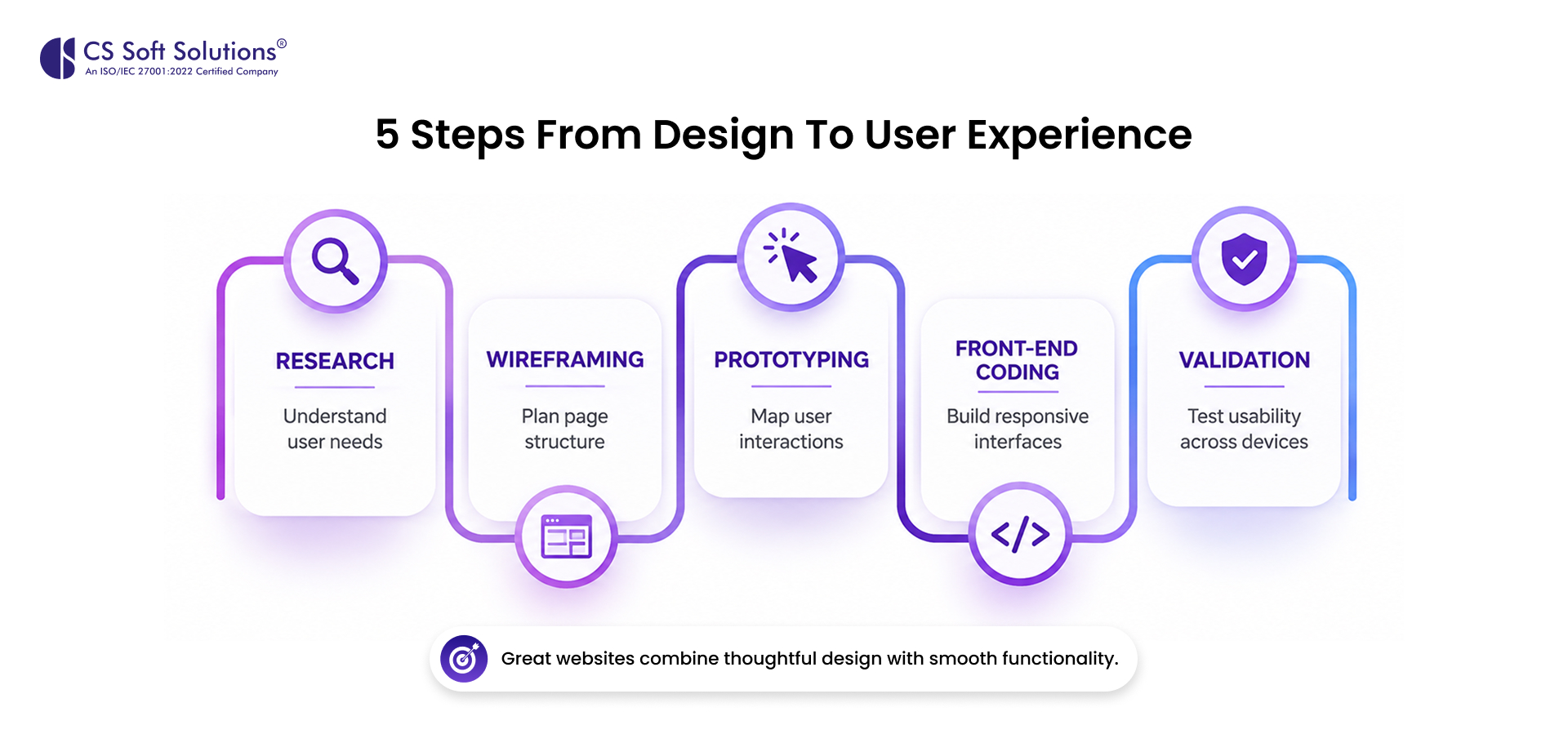
2. UX Architecture and Design: Plan the User Experience
When the requirements are identified, the next step is to determine how users will go around the site. Good design is not all about choosing colors or making pretty pages. It should become apparent and easy to take any important actions.
A typical design stage includes:
- Sitemap and information architecture.
- User journeys and navigation planning.
- Wireframes for key pages.
- Visual design and interactive prototypes.
- Responsive layouts for different devices.
The ui ux front end developer’s role is to help bring these designs to life in a usable and feasible interface. At this point, working with the designers and developers together can save a lot of problems later in the development, such as in case of inconsistency.
3. Development: Turn Designs Into Working Features
Development is the stage at which you have a website or application. That meets approved designs and technical requirements. The front end is what the user sees. Also interacts with the back end that is for application logic, database, authentication and integrations.
Understanding the Front-end development workflow
A typical front end development process involves creating the structure of pages, applying visual styles to them. Also adding interactive elements and integrating the front-end with back-end services.
Common technologies are: HTML, CSS, JavaScript and frameworks like React, Angular, Vue.js. This will depend on the complexity of the project. Also the systems in place and the needs for future maintenance.
Build the Back End and Integrations
The back-end functions are those that users might not be able to see. These can be as some of the following: Account creation, Payment Processing, Data Storage, API communication and business rules.
For SaaS businesses, the architecture might also be required to accommodate multiple customer accounts, subscription billing, usage tracking, and third-party integrations.
API-first architecture, cloud services and automated development pipelines are common features of modern development teams to boost flexibility. Engineers are responsible for reviewing all code, validating outputs and ensuring technical quality. But artificial intelligence can help with routine development tasks.
4. Dedicated Development Teams: Keep Delivery Structured
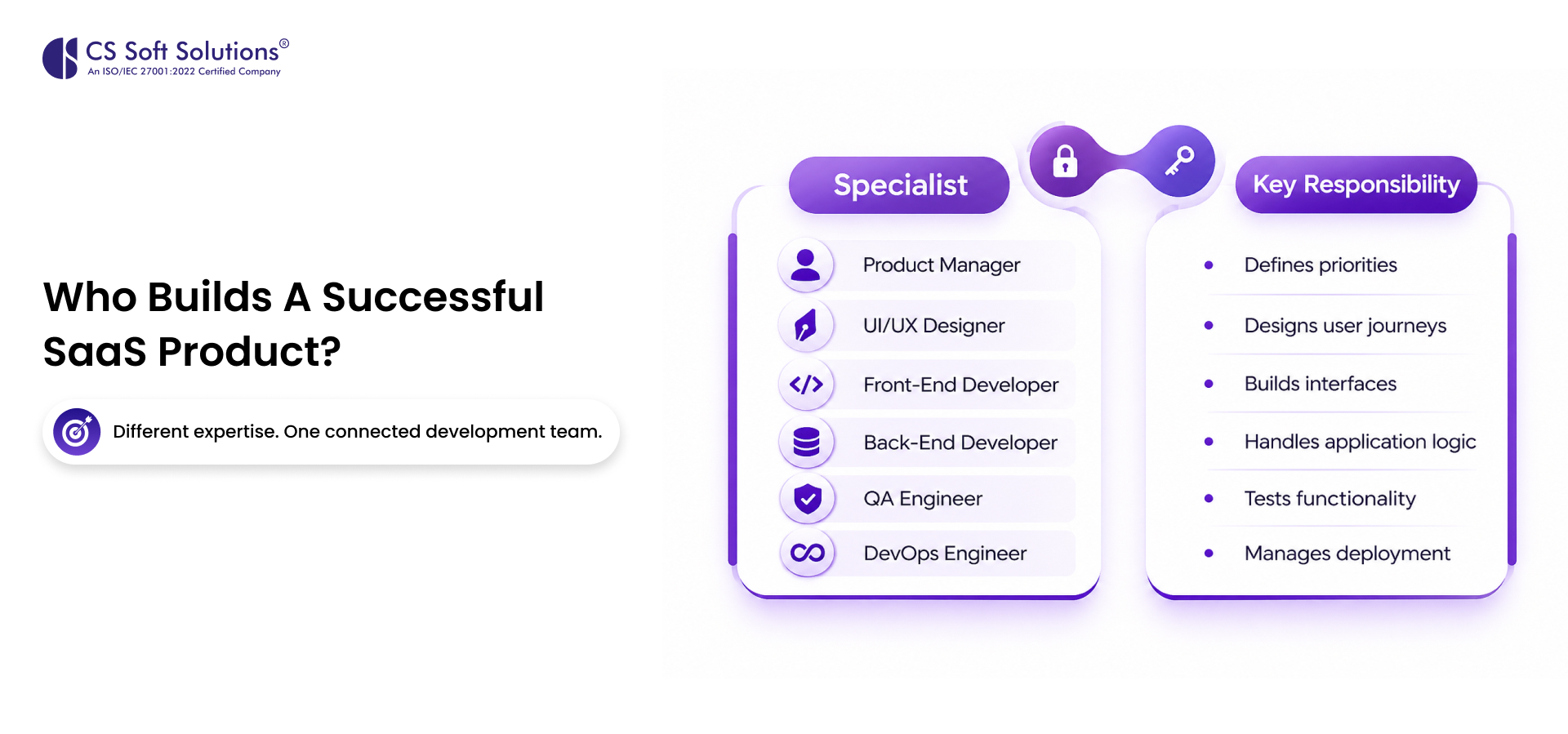
More complex websites and SaaS solutions demand multiple experts on the team. Designers bring their design expertise. The front-end developers add their skills in the front end and back-end engineers bring their skills in the back end. Where QA specialists bring their quality assurance expertise, and DevOps specialists bring their DevOps skills.
It can be beneficial for businesses to hire dedicated development teams to access all the features. It needs a project instead of hiring each one individually.
A structured team needs to have:
- Clear defined roles & responsibilities.
- Defined sprint goals and delivery priorities.
- Regular progress reviews.
- Code reviews and documentation.
- Collaboration between development and testing teams.
The benefit of agile development is that it breaks up work into manageable cycles. Businesses can preview the whole website functionality. Also can provide input and adjust priorities as the needs change.
SaaS products especially are subject to change in product roadmaps based on new integrations, customer input and market demands.
5. Testing and Performance Optimisation
A site that appears fine in the developmental process may have issues when real users use it. Testing can be used to discover defects, security vulnerabilities and performance problems before the product is released to its end users.
There are several areas that should be part of a complete testing process.
Functional testing: Ensure that forms, buttons, navigation, authentication and other aspects work as intended.
Cross browser and cross device testing: Ensure functionality of the website is consistent between major browsers, screen resolutions and devices.
Performance testing: Test load times, server responses and behavior under expected loads.
Security testing: Authenticity, permissions, handling of data, vulnerabilities, third party dependencies.
Integration testing: Ensure APIs, payment systems, CRM platforms, and other systems working together perform and communicate properly.
They should also simulate some important user journeys, including registration of an account and changes to subscription plans, and password retrieval.
6. Web Development Services for Deployment and Launch
Once the site is tested and approved it is moved into the deployment phase. This step includes configuring domains, preparing a hosting environment, setting up security certificates and publishing an application.
A planned release process should be included as part of the professional web development services and should not be simply uploading files to a server.
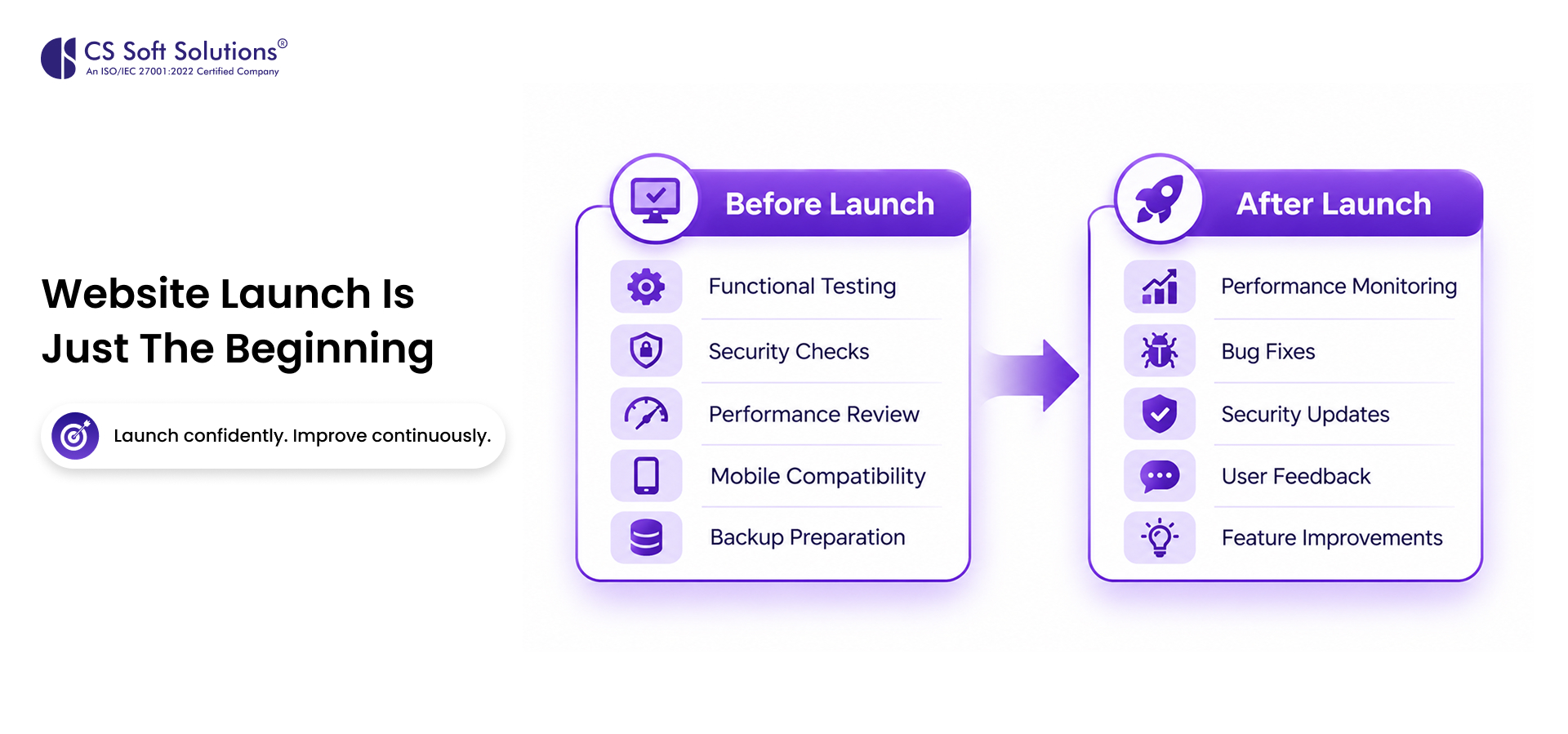
Before launch, teams should confirm:
- Hosting and infrastructure configuration.
- Domain and DNS settings.
- SSL certificates and security controls.
- Database connections and environment variables.
- Analytics and monitoring tools.
- Backup and rollback procedures.
Payment testing, checkout validation and order-processing tests are also part of the deployment process for ecommerce businesses.
Choosing a WooCommerce website development company
Businesses planning a WordPress-based online store may need specialist support from a woocommerce website development company. The team should be familiar with product catalogues, payment systems, shipping details, stock links, and checkout optimization.
Last but not least, a final pre-launch review should include a test of the whole customer journey – from their landing page to the desired action.
7. Continuous Improvement: Keep the Platform Relevant
Once you’ve launched your site, you’re not finished. Once users start playing with it, enterprises can get data on performance, usability and user behavior.
It is especially crucial for SaaS providers to think of their platforms as a product that is in constant development. There may be reasons to upgrade the application to meet the needs of new users, software updates and security issues.
Post launch activities can include:
- Monitoring website performance and availability.
- Reviewing analytics and user behavior.
- Fixing bugs and applying security updates.
- Improving conversion and onboarding journeys.
- Adding features based on customer feedback.
- Updating integrations and infrastructure.
This is a continuous process that has been planned from the start of a web development process. It assists businesses in preventing a final moment of launch when the platform still has a problem that requires attention.
Frequently Asked Questions
How long does the web development process usually take?
The timeline is dependent on the size of the website, the integrations, the approval requirements and the functionality of the website. A basic commercial site can take anywhere from weeks to months, and a more complicated SaaS site can take months, or even years. Requirements are clarified and feedback is given on time, which helps to keep delivery on track.
Why is testing important before launching a website?
Testing reveals functional errors, security flaws, performance and compatibility problems. It also acts as a confirmation of integrations and critical customer journeys are functioning properly.
Build a Website That Can Grow With Your Business
A reliable website is the outcome of careful planning, design for users, disciplined engineering, and constant incremental improvement. Every step from the initial discovery meeting to post launch optimization adds to the quality of the end product, the platform.
The web development process must not only facilitate a one-off launch for SaaS companies and scale-up businesses, it needs to enable the growth of the business. It should provide an underpinning for new features, evolving customer needs, and future digital development.
CS Soft Solutions India Pvt. Ltd is a web application development company, custom software engineering, UI/UX design, quality assurance and support company. The company’s engineering-led solution integrates agile approaches to delivery with cutting-edge technologies to enable companies to create scalable digital platforms that support their operational and product objectives.
 Enterprise security standards