How Can an AI Content Outline Strategy Improve Research Before Writing?

Oct 8, 2026
5 min
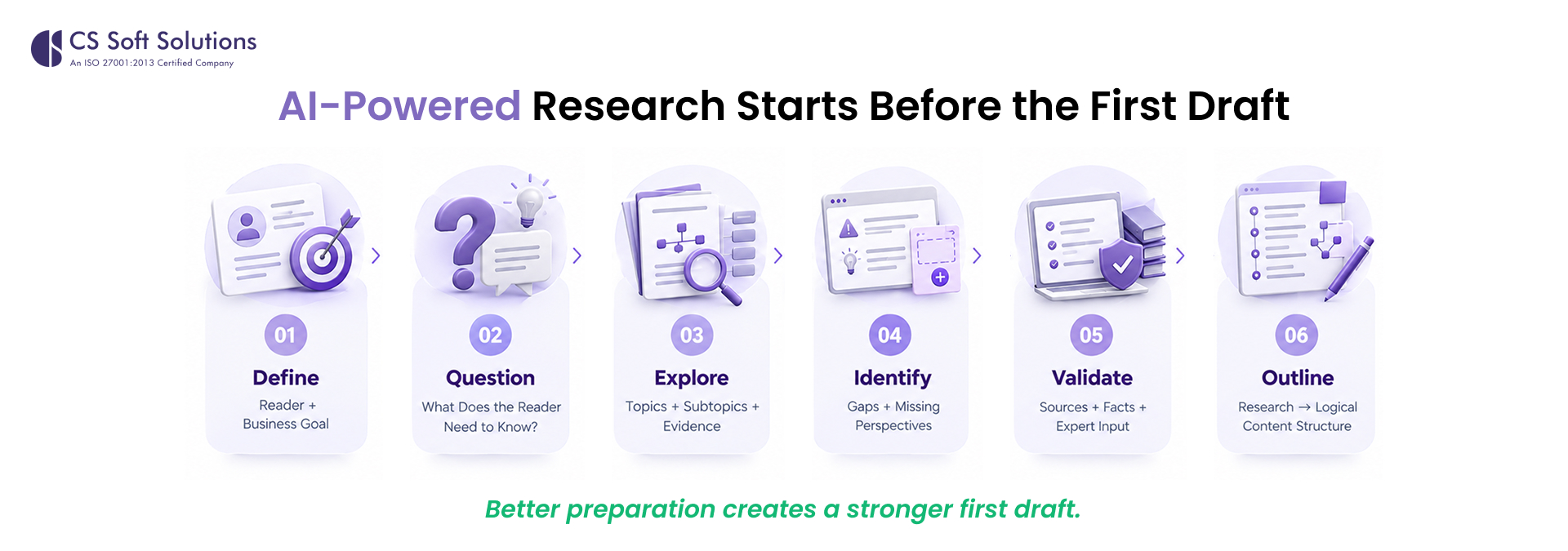
Good content often begins long before you write the first sentence. Research helps you select which questions to answer. And which evidence to use and where you can actually bring value to an article.
You can find an AI content outline strategy useful to add a bit more system to that preparation. It assists authors in finding research subjects and organizing questions around their topic. Also constructing a logical path from research to the final article.
The trick is to employ AI as a research assistant. Assumptions have to be questioned, what readers actually want to know has to be decided, and sources still need to be appraised by people.
Why AI Strategy Consulting Matters Before Content Research
Start With the Business Question
Context is the foundation of good research. Content teams need to know the purpose. Then they can start doing research. AI strategy consulting can help companies align content initiatives with broader commercial objectives.
Define the Reader’s Real Information Need
And the same topic can result in completely different articles depending on the audience.
If you see these differences before you start your research. Then your post will not be a collection of common information.
Building an AI Content Outline Strategy Around Research Questions
Turn One Topic Into Several Questions
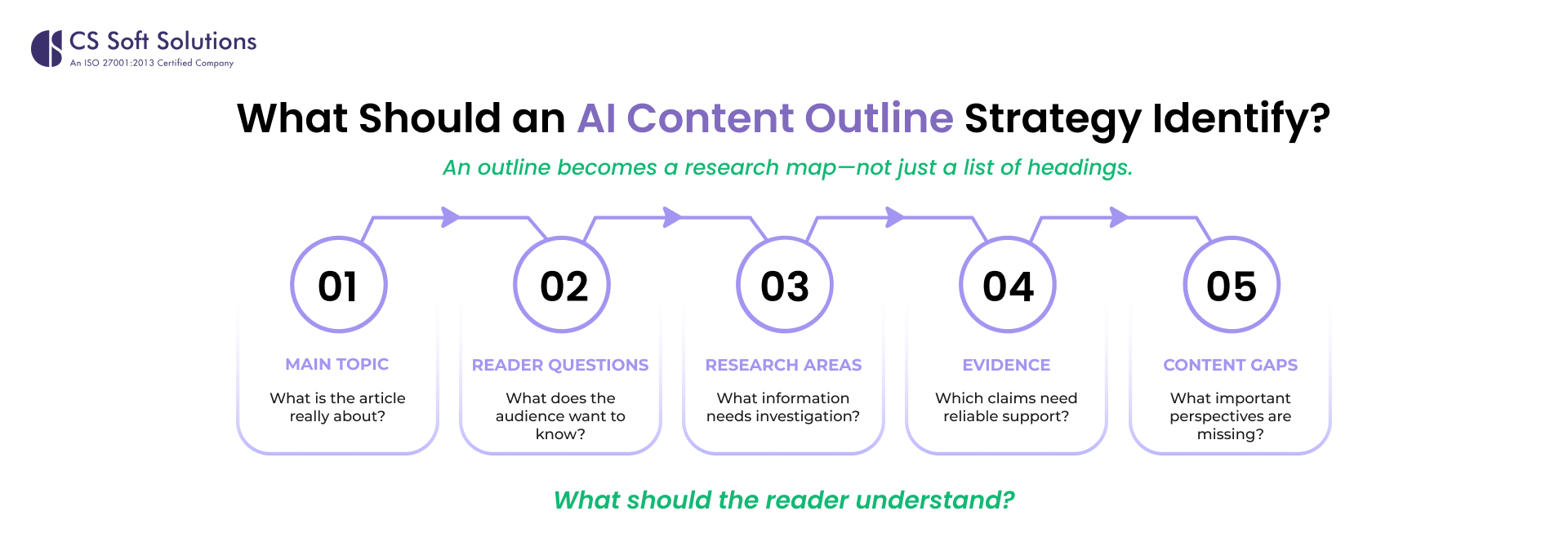
A useful AI content outline strategy should treat an outline as a research framework.
The main topic can be divided into questions such as:
- What does the reader already know?
- What problem are they trying to solve?
- Which concepts need explanation?
- What evidence would support the key claims?
- What practical challenges should be addressed?
- What misconceptions might need clarification?
- What should the reader understand by the end?
These questions give researchers a clear direction.
Identify Information Gaps Early
AI is able to scan the portions you’re about to build. Even highlight areas that seem to be underdeveloped.
Further investigation may identify the requirement for data quality, security, governance, and ongoing maintenance.
How an AI Marketing Strategy Generator Can Help
Connect Content With Different Buyer Stages
An AI marketing strategy generator can help content teams explore questions. That may arise at different stages of the buyer experience.
Keep AI Suggestions Under Human Review
We shouldn’t presume that AI’s research suggestions are correct. Just because they’re produced by AI.
The technology could generate queries that are too broad, rehashing existing ideas or based on assumptions. That needs to be confirmed.
How AI & Machine Learning Development Services Strengthen Research Depth
Bring Technical Context Into the Outline
Technical topics require more than a superficial explanation.
AI & machine learning development services include data pipelines, APIs, model selection, infrastructure, testing, security, monitoring, and scalability.
Those concerns can affect the study plan itself.
Separate Technical Claims From General Commentary
An outline can indicate which statements need technical evidence and which can be stated conceptually.
Separating these needs out early helps authors avoid making unsupported technical assumptions later.
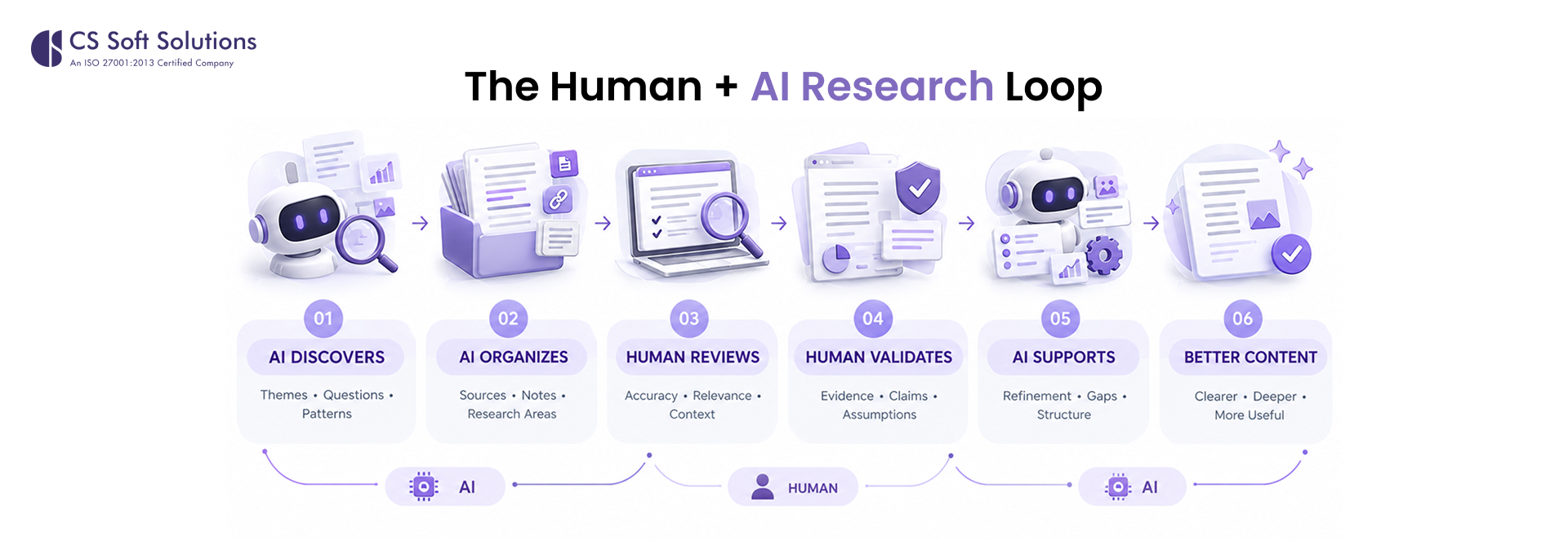
AI-Augmented Engineering Teams and the Human Research Loop
Let AI Handle Repetitive Research Tasks
AI-Augmented Engineering Teams offer a broader idea equally relevant for content research. AI is able to speed up repetitive labor.
In a research workflow, AI can help:
- Group-related themes
- Summarize lengthy material
- Identify recurring concepts
- Compare different viewpoints
- Flag potential information gaps
- Organize research notes
Keep Verification With Human Experts
Researchers still need to check sources, unsupported claims, and identify outdated information.
In the areas of technology, finance, legal, security, and regulatory problems. In that situation human review becomes particularly important.
AI Gateways Secure Model Deployment for Safer AI Workflows
Protect Sensitive Research Information
AI-supported research may contain corporate papers, proprietary information, and customer data.
This makes security a major aspect of the workflow.
Organizations exploring AI gateways secure model deployment can build greater controls. Especially on how models interact with enterprise apps and information.
Establish Clear AI Usage Policies
A secure workflow should answer practical questions such as:
- Which AI tools are approved?
- What information can employees submit?
- Which systems can access internal data?
- How are interactions monitored?
- What information requires additional protection?
These decisions enable firms to apply AI productively, with security not as an afterthought.
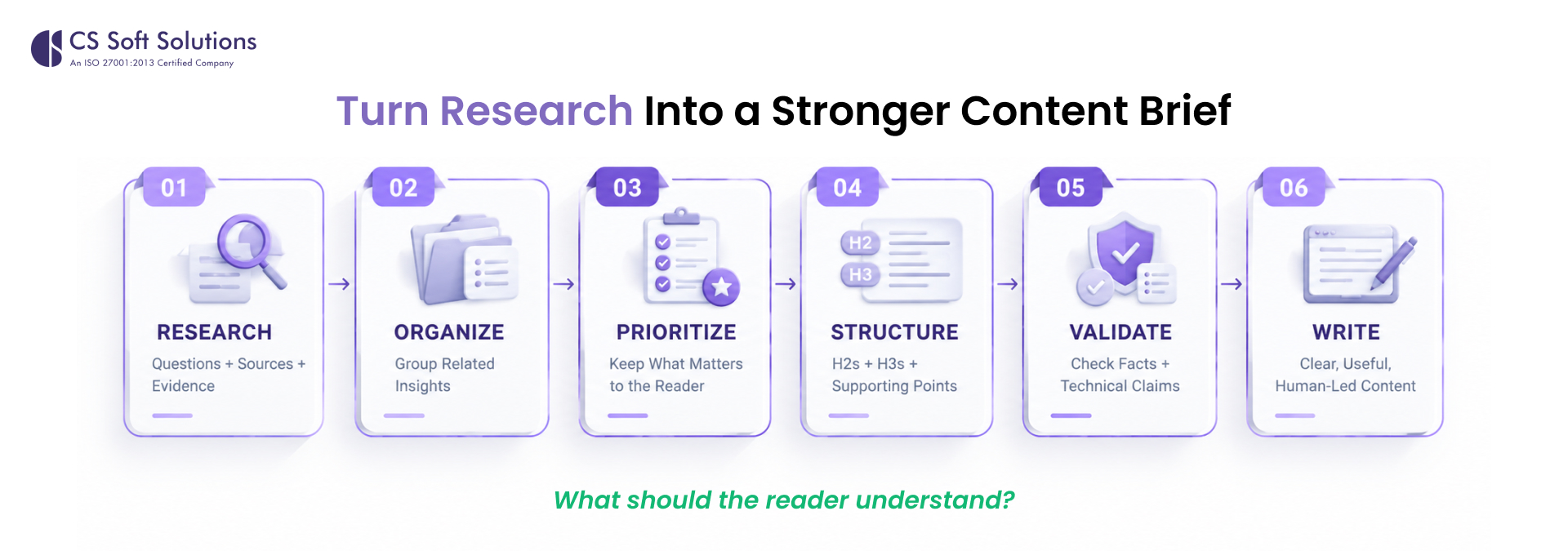
Turning Research Into a Better Writing Brief
Give Every Section a Purpose
A research-heavy outline becomes more useful. Make sure each section explains the accomplishment.
For example:
Section purpose: Discuss the need to verify AI-generated research.
Evidence required: Credible technical or industrial sources.
Reader question: Can we trust AI research if it doesn’t have human review?
Key takeaway: AI can accelerate discovery. But people remain responsible for validation.
This gives the writer a clear destination for each section.
Create a Direct Path From Research to Draft
The final outline should allow the writer to see where the content goes.
The writer can work through a series of queries and supporting evidence.
Better Research Starts Before the First Draft
Use AI to Improve Preparation
The primary value of an AI content outline strategy isn’t always faster writing.
Its biggest advantage is being better prepared.
An organized method can reveal questions that remain unresolved. Also help organize complicated themes. That further assists authors in figuring out what evidence they need.
The firms, like CS Soft Solutions India Pvt. Ltd., can aid enterprises in building greater AI capabilities. This helps embed AI strategy, security deployment, and real-world business needs into scalable technology solutions.
 Enterprise security standards