How an AI Marketing Strategy Generator Uses Predictive Analytics

Nov 12, 2026
6 min

Most SaaS marketing teams have more data than they can read. Trial sign-ups, feature clicks, webinar attendance, and support tickets are distinct tools and not many people have the time to tie them together. An AI marketing strategy generator fills that gap, turning dispersed signals into a plan a team can execute on.
The prediction is what is valuable. Instead of reporting what happened last quarter, the system predicts what’s likely to happen next, and recommends where effort should be applied. This article looks at how predictive and descriptive learning in machine learning makes those forecasts, how they affect campaigns and where they fall short.
The Data and Models Behind the Forecasts
Predictive and Descriptive Learning in Machine Learning
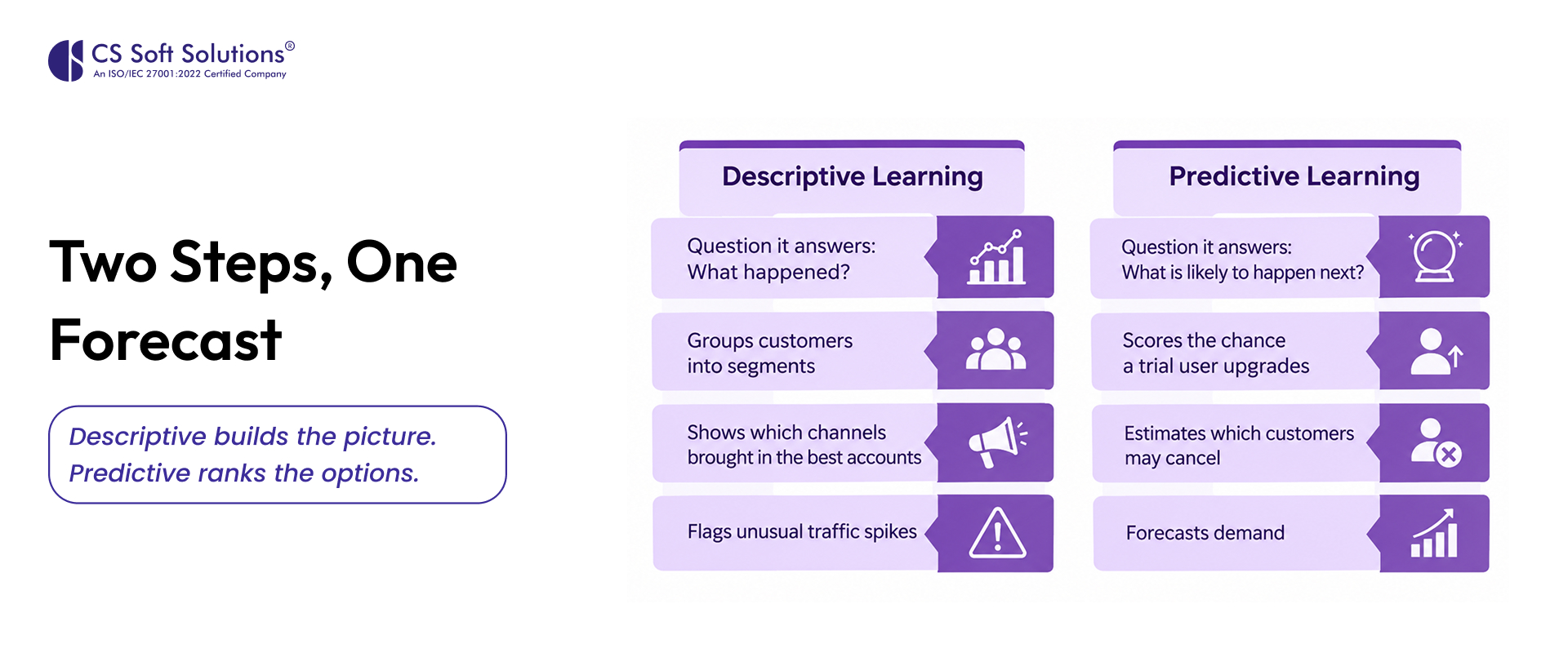
Descriptive models summarize the past; They categorize clients in groups, indicate what channels brought in the best accounts and flag strange surges in traffic. Predictive models employ those patterns to predict what will happen next, such as the chances of a trial user upgrading or a paying client canceling.
Typically a generator will run both in sequence. The descriptive stage is the one that paints the picture and the predictive analytics step ranks the possibilities. For lead scoring and churn risk, logistic regression and gradient boosted trees are employed and time series models are used to estimate demand. Teams who omit the descriptive step often wind up with scores that no one can explain.
First-Party Data Sets the Ceiling
Privacy rules like California’s CCPA and tougher restrictions on browser tracking have decreased the flow of third-party data. Generators now rely on first-party data such as signups, purchases and in-app behavior. Duplicate contacts, missing lifecycle stages and inconsistent field names quickly erode accuracy, and every downstream marketing automation and lead generation workflow inherits those problems. A little bit of data cleaning before going live saves a lot of headache down the road.
What an AI Marketing Strategy Generator Does With a Score
A forecast is worthless until someone does anything about it. The generator turns scores into an AI digital marketing strategy by recommending what category to target, what channel to try and how to split spend. Each proposal is accompanied by a rationale for the proposition so a marketer can accept, modify or reject it.
Building an AI Content Outline Strategy From Intent Signals
That’s where you see the forecasts first, in content planning. The program analyzes search demand, prior themes that impacted pipeline and gaps versus competitors, and ranks outlines by expected return. And it’s also increasingly including the types of questions people ask AI assistants that are different from regular keyword searches.
But someone still checks every single outline to make sure it’s right and it sounds like the brand voice. The simplest way to consider an AI content outline strategy is to think of the output as a brief, not a whole article ready to go. Publish it like this and you get thin pages that all read the same.
Shaping a Digital Marketing Lead Generation Strategy Around Likelihood to Buy
Lead score is the process of assessing prospects based on how likely they are to convert. The generator uses the lead scoring to send money and attention into a digital marketing lead generation strategy. Think of a hypothetical project-management SaaS firm where webinar registrants are more likely to convert to paying customers than registrants from paid marketing. The tool would suggest transferring some of the ad spend to webinars and advertising them to similar accounts.
The suggestion is a hypothesis not a requirement. Good setups conduct this as a controlled test with a holdout group, so the team can see if the expected lift really materializes.
Fitting Predictions Into a SaaS Funnel
An AI marketing strategy generator earns its place when it hooks into the tools the team is already using, such as the CRM, the email platform and the product analytics dashboard. The recommendations live in a report without those links. With them, recommendations can result in same-day actions.
Marketing Automation and Lead Generation Working From the Same Scores
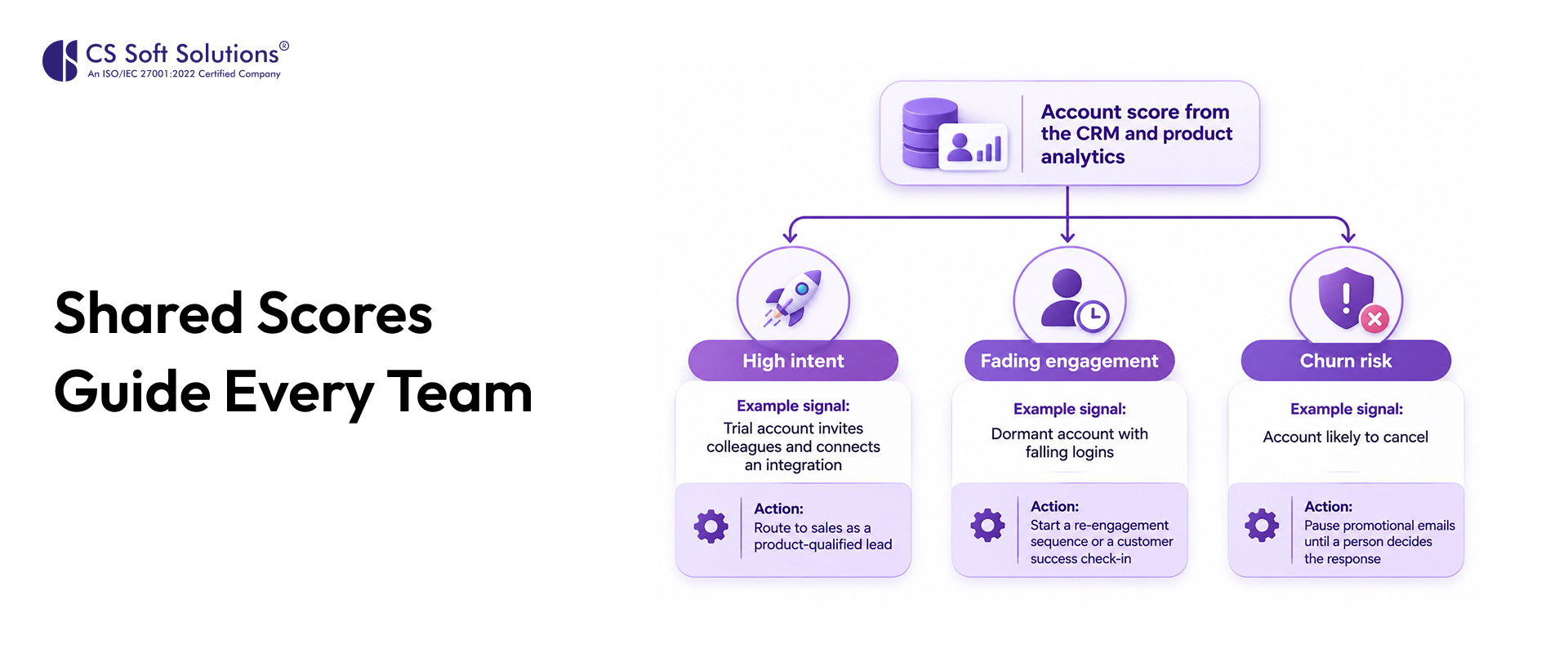
Shared scores keep marketing automation and lead generation targeting the same people. A trial account that brings in three colleagues and ties in an integration, typically called a product-qualified lead, can go directly to sales. If an inactive account is seeing a drop in logins, they can be put on a re-engagement sequence or receive a check-in from customer success.
Scores might delay things too. We can halt emails to accounts that are likely to churn while a human takes further steps.
Where Forecasts Go Wrong
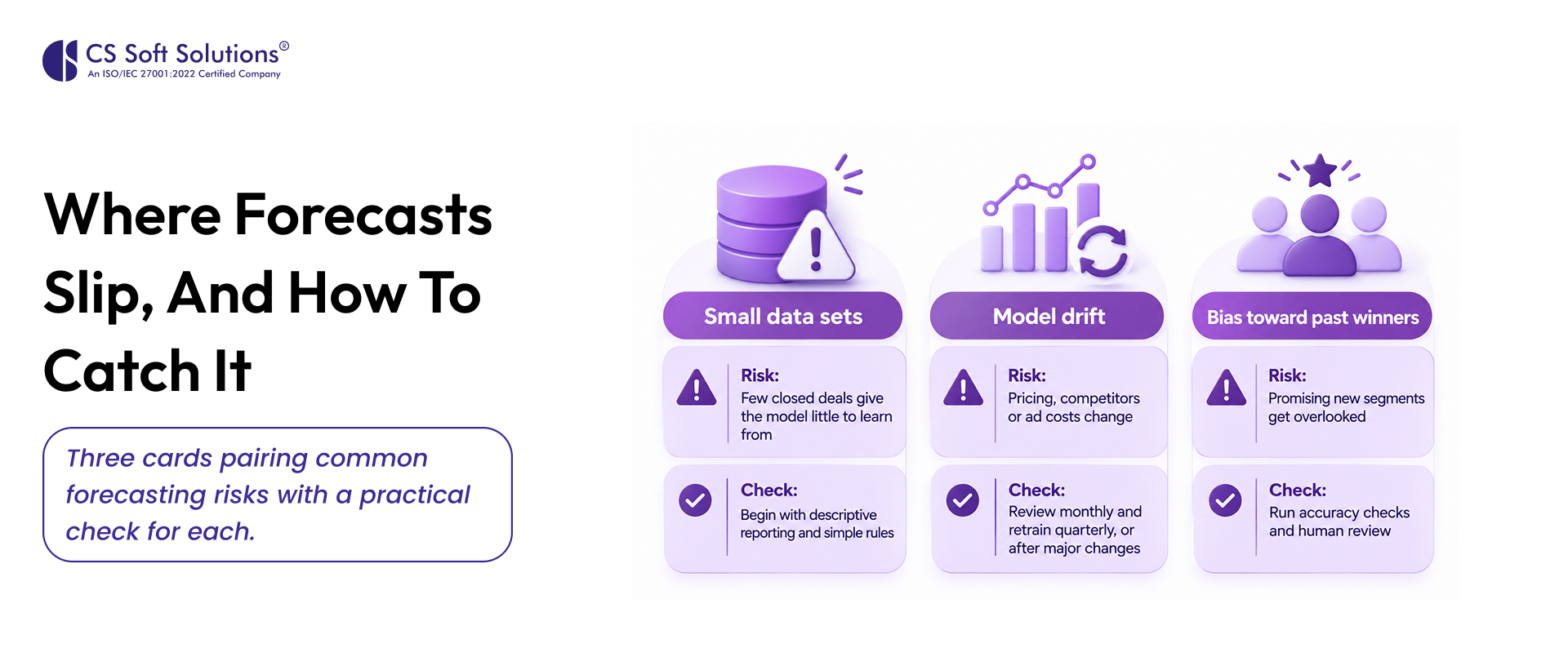
The first problem is the small dataset. A fledgling company with few finished agreements doesn’t provide a model much to learn from, so scores swing wildly. Or with price changes, or competition, or ad prices. Models wander. They keep applying patterns that don’t hold anymore.
The more subtle risk is bias. The audience you already serve is likely to be favored by models trained on prior winners, potentially hiding a promising new segment. Regular accuracy checks and human inspection help catch these errors.
Frequently Asked Questions
How much data does a team need before predictions become useful?
There’s no hard number, but models need a fair amount of historical conversions to detect patterns. A corporation with a couple hundred closed deals may obtain unsteady scores. Teams new to predictive and descriptive learning in machine learning can begin with descriptive reporting and simple rules, then add predictive scoring as won and lost deals accrue.
Can a generator replace a marketing strategist?
No. It rapidly identifies trends and compares scenarios but it cannot determine brand positioning, pricing sensitivity or timing around a new introduction. Strategists define goals, assess the recommendations and own the AI content outline strategy before anything is released. The tool replaces the research phase less than it replaces judgment.
How often should the models be retrained?
It is contingent upon the pace of change in business. As a rule, we do performance evaluations on a monthly basis and retrain on a quarterly basis, or sooner if there is a pricing adjustment, large launch or shift in the cost of ads. Drift is detected by comparing projections versus actual findings.
Starting Small With an AI Marketing Strategy Generator
Start with one question the data can answer: Which lead sources deserve a larger part of the digital marketing lead generation strategy? Test the generator’s predictions on a quarter’s worth of holdout group, compare to actuals and only expand where the forecasts are true.
Teams who need help establishing or integrating this type of system can look at CS Soft Solutions India Pvt. Ltd., which provides machine learning development, marketing automation and digital marketing services in addition to its software engineering expertise. Whatever approach a corporation takes, the goal is the same: better decisions made faster, with a person accountable for each one.
 Enterprise security standards